
One Operation Instead of Five Vendors: Perfy Beverage Case Study

Summary
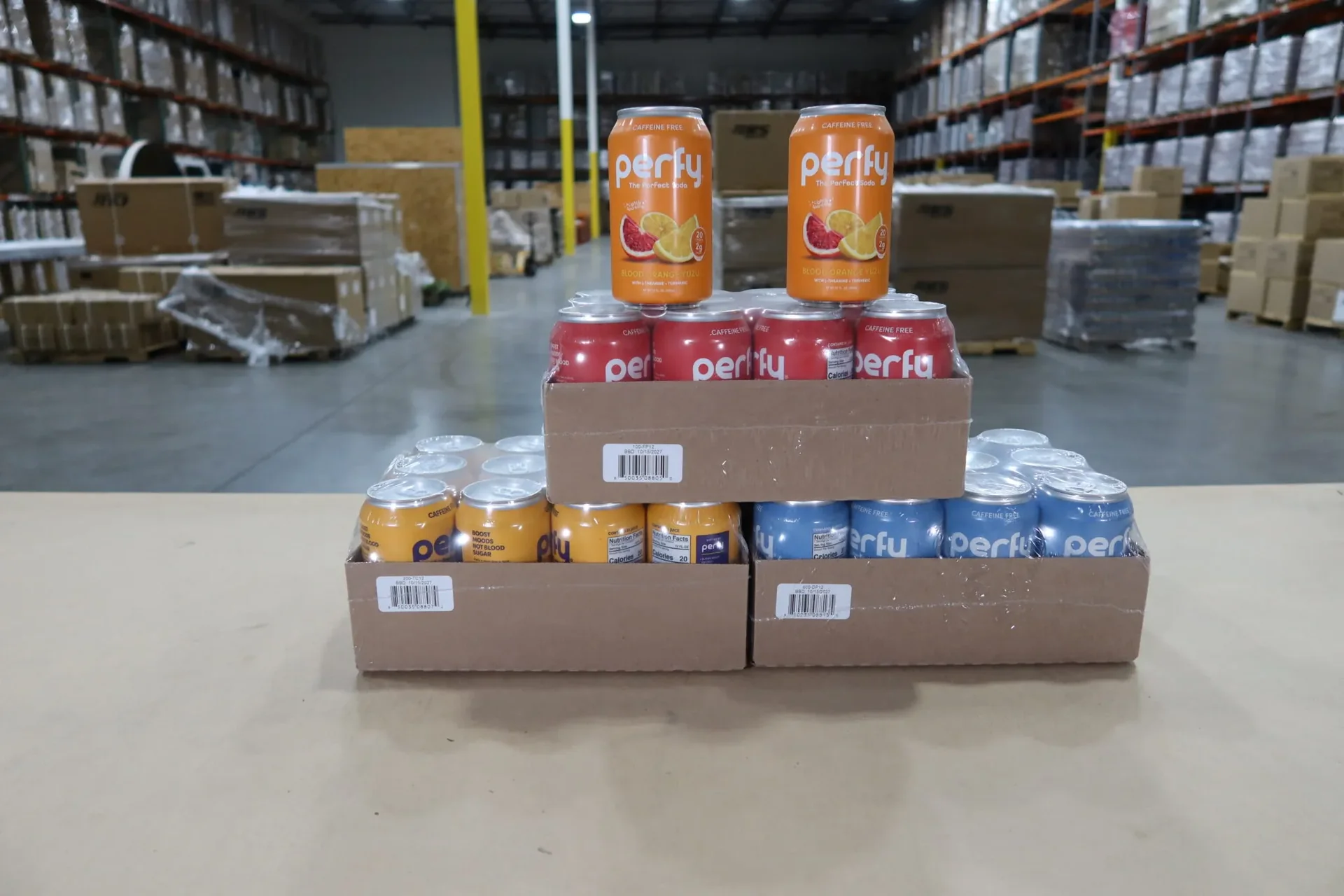
Perfy was growing and their supply chain had grown with them, into a set of providers that didn't talk to each other. Multiple co-manufacturers, separate packaging, several freight carriers, inventory in different buildings. We consolidated it into one operation so production, inventory and fulfillment ran off the same information.
The situation
Perfy didn't have a demand problem. They had a coordination problem, which is what growth usually produces first.
Each piece of their operation worked. Production ran, freight moved, orders shipped. But nothing was connected, so nobody could answer basic questions quickly: how much inventory exists, where it sits, what's in transit, what's ready to ship.
Three specific frictions came out of that.
Production wasn't tied to demand. Runs were scheduled independently of fulfillment, so inventory arrived early and cost storage, or arrived late and cost sales.
Retail and DTC competed for the same stock. With no coordinated allocation, a retail PO could consume inventory the DTC channel was counting on, and neither side knew until it happened.
Freight was split across providers. Different carriers handling different legs meant inconsistent cost, no single view of what was moving, and more time spent chasing status than shipping.
Underneath all of it, cost per order and margin by channel were hard to see clearly.
What we did
Mapped the whole operation first. Production timelines, inventory locations, freight movements, fulfillment workflows and channels, all documented before anything changed. That's what surfaced where the disconnects actually were rather than where they appeared to be.
Consolidated coordination under one team. Material procurement, inbound freight, warehousing, retail distribution and DTC fulfillment run through us instead of through five relationships Perfy had to manage.
Connected production scheduling to fulfillment demand. Runs planned against what the channels actually needed, which cut both the early-arrival storage cost and the late-arrival stockouts.
Put both channels on one inventory pool. Retail and DTC allocate from the same stock with visibility into what each is consuming, so the channels stop competing blind.
Brought freight in-house alongside fulfillment. Inbound and outbound coordinated by the team holding the inventory, which is what makes the numbers real.
Results
One source of truth for inventory. Levels, location and movement visible in one place rather than reconstructed from several.
Predictable inventory flow. Production aligned to demand, which reduced both excess storage and stockouts.
Channel conflict resolved. Retail and DTC allocating from one pool instead of racing each other for stock.
Freight consolidated. One coordinated transportation picture instead of several partial ones.
Cost visibility by channel. Leadership can see fulfillment and freight cost per channel, which is what makes margin decisions possible.
Why this one matters
The instinct when a supply chain gets complicated is to add a specialist for each problem. That's how most fragmented operations get built, one reasonable decision at a time.
The cost doesn't show up as a line item. It shows up as the hours your team spends coordinating between vendors, and as the decisions that get made late because nobody had the full picture.
Consolidation isn't about fewer vendors for its own sake. It's about one team holding enough of the operation to answer a question without making three phone calls.
Questions this raises
What is supply chain consolidation? Bringing separate logistics functions (production coordination, freight, warehousing and fulfillment) under one provider so they operate off shared information instead of independent schedules.
How do retail and DTC channels end up competing for inventory? When each channel forecasts and allocates separately, both plan against the same physical stock without seeing the other's commitments. One inventory pool with visibility into both removes the conflict.
Does consolidating mean giving up control? The opposite in practice. Perfy gained visibility they didn't have when five providers each held one piece of it.
Can you coordinate with our existing co-manufacturers? Yes. Perfy produces through multiple partners and we coordinate inbound from all of them rather than requiring a single source.
Want to learn more?
Learn how TCB can fulfill and help you grow your beverage brand!
New Post:
Blog
Why Warehouse Location Is a Margin Decision for Beverage Brands
Warehouse location plays a critical and frequently underestimated role in beverage logistics. Unlike lightweight consumer goods, beverages are heavy, typically palletized, and shipped in high volume, which means distance has an outsized effect on freight cost, delivery speed, product integrity, and retailer compliance.
Read More