
From 300 Pallets to 4,000: Scaling an Energy Drink Brand Through COVID

Summary
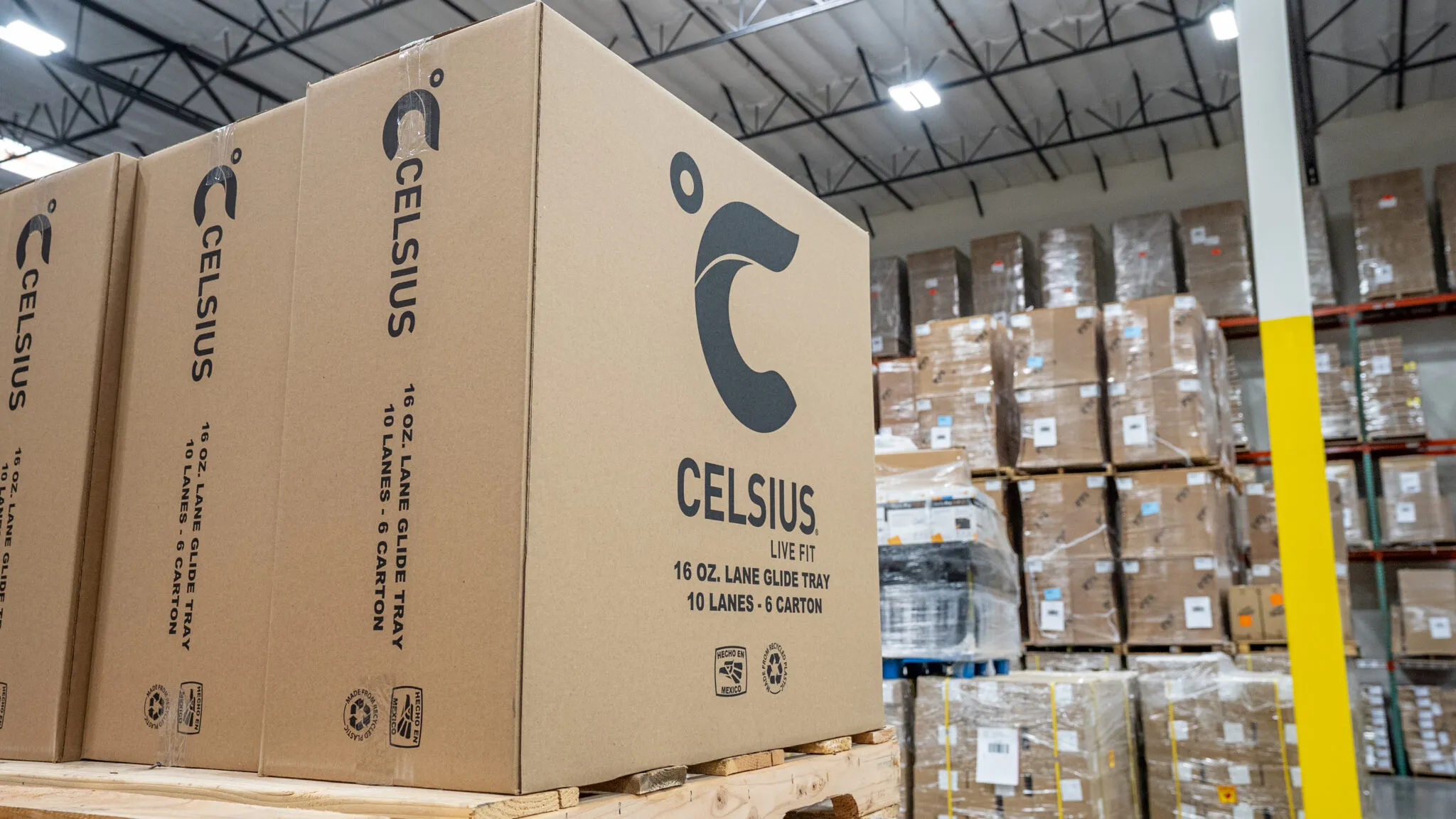
In 2020, mid-pandemic, this energy drink brand had 200 to 300 pallets with us and a fractured beverage supply chain. Within months it was 4,000+ pallets, a sales force five times the size, and #1 ARV displays across all 52 BDI markets. Savings hit 22% on small parcel and 12% on freight.
The situation
The relationship started in the worst possible conditions. 2020, beverage supply chains broken, distribution delayed, warehouse backlogs everywhere.
The initial ask was narrow: get point-of-sale and sales staff materials out quickly and cleanly. Two to three hundred pallets.
Then the brand made an aggressive bet: doubling down on retail visibility through dealer loaders, large-format displays and fighting for incremental shelf space. That strategy only works if the physical execution keeps up, because a display program that arrives late to a retail reset is money spent for nothing.
At the same time, growth was creating the cost problem that eventually threatens every scaling beverage brand:
Single-location shipping. Beverage is heavy and freight-sensitive, so cross-country shipments from one facility made every distant order expensive.
Retail compliance penalties. National retailers enforce routing guides, pallet configurations, labeling, appointments and documentation. Every miss is a chargeback, and chargebacks are a hidden fulfillment cost that never appears in a rate quote.
No unified inventory view across ecommerce, Amazon, wholesale and retail, which produces discrepancies, imbalances and emergency shipments.
Seasonal surges overwhelming capacity during promotions and launches.
What we did
Split inventory bi-coastally. Stock is positioned across Orlando and Las Vegas by demand density, so orders ship from whichever facility is closer. On heavy products, zone reduction is the largest available cost lever.
Built retailer-specific compliance workflows. Routing guide adherence, pallet configuration, labeling, documentation, appointment scheduling and tracking, applied per retailer rather than generically.
Centralized inventory across both sites. Real-time SKU visibility with lot tracking, expiration monitoring, reorder notifications and channel-based allocation. That's what stops one channel consuming stock another was counting on.
Optimized freight and packaging. Packaging dimensions, carrier selection, freight class and dimensional weight analyzed together, then rebuilt.
Ran the field program. Sales assets, POS and display deployments managed alongside product, plus production, assembly and deployment of branded loader kits for mass-scale activations.
Scaled with them rather than behind them. From 300 pallets to 4,000+ without disruption, through a period when the brand multiplied its national sales force fivefold.
Results
4,000+ pallets under management, up from 200 to 300 at the start.
22% savings on small parcel and 12% on freight, through routing, carrier relationships and consolidation.
#1 in ARV displays across all 52 BDI markets in the US.
Sales force grew 5x with no operational breakdown.
Full continuity through COVID-era disruption, when beverage supply chains were widely disrupted.
National product drops executed without disruption.
Why this one matters
The freight numbers are the ones to notice: 22% on small parcel and 12% on freight, both during a period of rapid growth, when shipping cost usually rises faster than volume.
Those savings came from routing, carrier relationships and consolidating shipments that had been moving separately. None of that is a one-time rate negotiation. It's how the freight is planned, and it keeps paying as volume grows.
The bigger story is that the field program and the fulfillment ran through the same operation. Displays, loaders and POS arriving on time is what makes a retail visibility strategy work, and it fails when the company holding the product isn't the company shipping the displays. Being #1 in ARV displays across 52 markets is a logistics outcome as much as a sales one.
Questions this raises
How do you reduce fulfillment cost on beverage? Zone reduction first, through inventory positioned near demand. Then packaging and dimensional weight, then carrier selection and consolidation. Beverage is heavy relative to its value, so transportation dominates the cost structure.
What are dealer loaders? Branded display and merchandising kits deployed to retail locations to win shelf space and visibility. They require assembly, kitting and coordinated deployment on a retail calendar.
Can you handle field sales materials as well as product? Yes. POS, displays and sales assets are managed alongside inventory, which is what keeps a retail program arriving complete and on schedule.
How do you prevent chargebacks at national retail scale? Retailer-specific workflows checked before shipment. Each retailer's routing guide differs, and validation has to happen before the truck leaves, since deductions are rarely recovered afterward.
What does splitting inventory across two coasts actually save? Transit distance on every order. Shipping from the closer facility cuts zones, and on heavy product like beverage, zones are one of the biggest drivers of what each order costs to deliver.
Want to learn more?
New Post:
Blog

Why Warehouse Location Is a Margin Decision for Beverage Brands
Warehouse location plays a critical and frequently underestimated role in beverage logistics. Unlike lightweight consumer goods, beverages are heavy, typically palletized, and shipped in high volume, which means distance has an outsized effect on freight cost, delivery speed, product integrity, and retailer compliance.
Read More