
When the Pallet Doesn't Fit the Product: Drink Weird Case Study

Summary
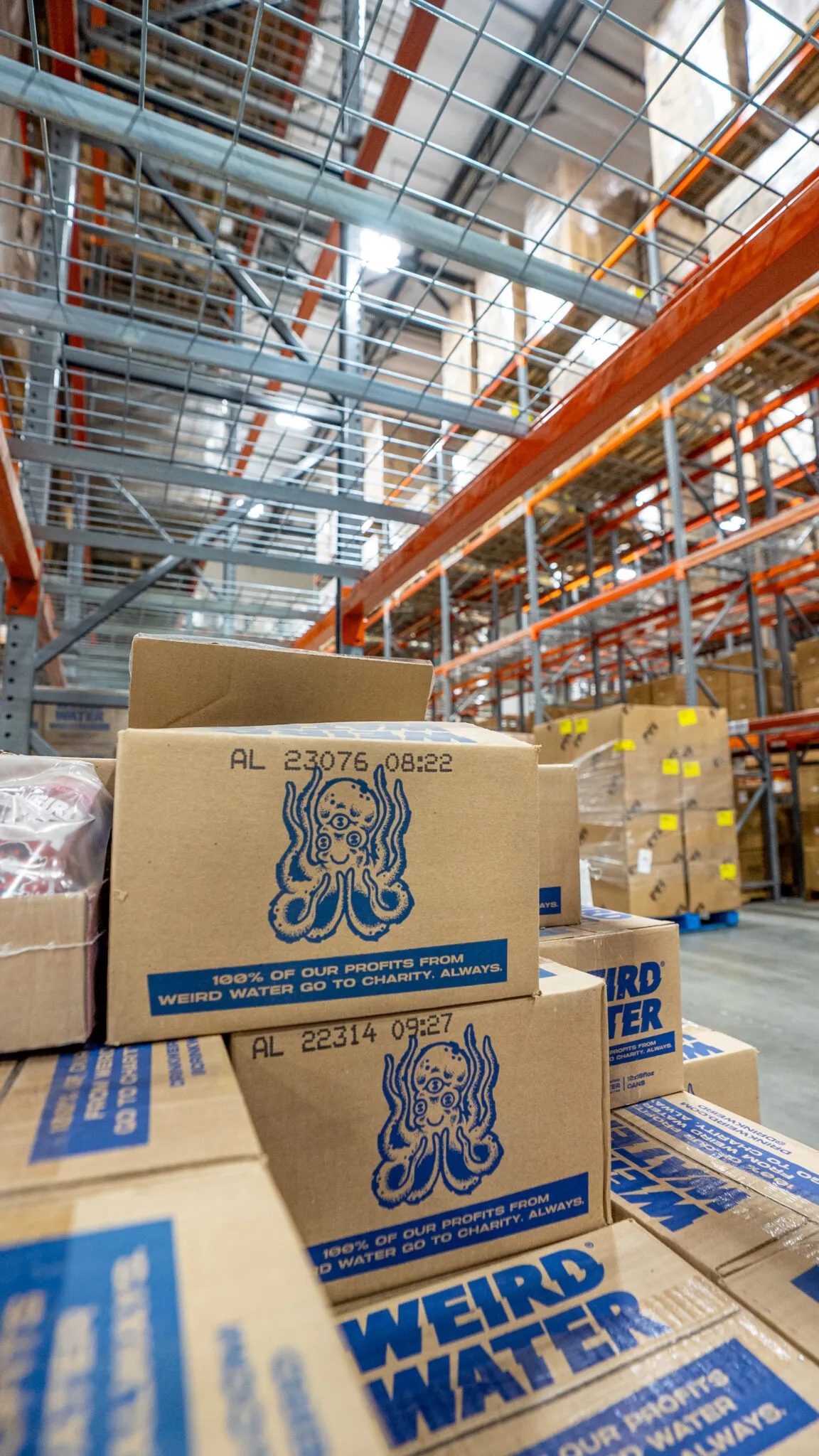
Drink Weird's packaging doesn't follow standard beverage logic: non-traditional pack sizes, mixed-format cases and fragile components. Standard pallet patterns either waste space or crush product. Custom palletization and separating similar-looking variants cut both damage and mis-picks.
The situation
Beverage distribution centers are built around uniformity. Same case pack, same pallet footprint, same stacking pattern, moved in volume. That efficiency is the whole model.
Drink Weird broke every assumption in it.
Their line runs non-traditional pack sizes, mixed-format cases, fragile packaging elements, and a steady stream of limited-run SKUs and specialty variants. None of that fits standard pallet logic, and forcing it to creates two failure modes at once.
Damage. Standard stacking patterns apply pressure where fragile packaging can't take it. Insufficient dunnage, inflexible picking, or a pallet built the usual way all produce breakage, which becomes returns, replacements and an unhappy customer.
Mis-picks. Similar-looking variants sitting near each other in the same zone get grabbed wrong. On a brand running seasonal drops and limited releases, that's a recurring risk rather than an occasional one, and shipping the wrong variant to a retailer is worse than shipping late.
As SKU count grew with each drop and line extension, both risks compounded.
What we did
Built pallet configurations around the product instead of the standard. Stacking patterns designed to avoid pressure damage, footprints adapted for mixed-SKU cases, reinforced wrap and stabilization, and designated zones for fragile and specialty inventory.
That's warehouse engineering rather than warehouse operations: the storage design had to support the packaging rather than restrict it.
Separated variants that look alike. Structured SKU mapping with similar packaging variants physically and systematically separated, so the most common cause of mis-picks stops being possible rather than being caught later.
Tracked limited and seasonal SKUs properly, with real-time inventory visibility and lot control where applicable.
Built hybrid picking workflows. Mixed-case picking, retail replenishment and DTC fulfillment running through zone-based strategies rather than one standardized flow, with warehouse teams trained on this product's specific handling requirements.
Made SKU onboarding fast. With new drops arriving regularly, adding a SKU had to be routine rather than a project.
Results
Lower picking error rates from SKU mapping, controlled storage zones and system-guided workflows, which meant fewer returns and better retailer satisfaction.
Less damage through pallet configurations and handling built for fragile, non-standard packaging.
Faster order cycles from inventory staged and positioned for how it actually gets picked.
New SKUs onboarded without redesigning the process, which matters for a brand whose model is regular drops.
Why this one matters
Plenty of 3PLs will say they can handle any product. What they mean is that they'll put it through their existing process, and for unusual packaging that's exactly the problem.
Standard pallet logic exists because it works for standard products. Applied to fragile mixed-format cases it produces crush damage, and applied to similar-looking variants it produces mis-picks. Neither shows up immediately. They show up as a returns rate that seems high and nobody can explain.
Building the storage and picking design around the packaging costs time once, at onboarding. Forcing the product through a standard process costs a little on every order forever.
For brands innovating on packaging, that's the question to ask a prospective 3PL: not whether they can handle it, but what they'd change to handle it.
Questions this raises
Can you handle non-standard beverage packaging? Yes. Pallet configurations, storage layout and picking workflows are adapted to the packaging rather than the packaging being forced into standard patterns. That covers unusual pack sizes, mixed cases and fragile components.
How do you prevent damage to fragile packaging? Stacking patterns designed to avoid pressure points, appropriate dunnage and stabilization, and designated zones so fragile inventory isn't handled like everything else.
How do you stop similar variants being picked wrong? Separate them physically and in the system. Mis-picks on lookalike variants are a storage design problem before they're a staff attention problem.
Can you handle frequent limited releases and seasonal drops? Yes. New SKU onboarding is built to be routine, so a drop doesn't require redesigning workflows each time.
Do you support both retail and DTC for beverage? Yes, from one inventory pool with separate workflows. Mixed-case retail replenishment and individual consumer orders have different picking requirements.
Want to learn more?
New Post:
Blog

Why Warehouse Location Is a Margin Decision for Beverage Brands
Warehouse location plays a critical and frequently underestimated role in beverage logistics. Unlike lightweight consumer goods, beverages are heavy, typically palletized, and shipped in high volume, which means distance has an outsized effect on freight cost, delivery speed, product integrity, and retailer compliance.
Read More