
115 Routing Guides, 400 Orders, Zero Chargebacks: Crab Grab Case Study

Summary
Crab Grab left a failing 3PL heading into peak season, with containers arriving, retail orders accelerating and 115 retailer routing guides to satisfy. We shipped 400+ retail orders in a peak month with zero chargebacks.
The situation
Changing fulfillment providers is difficult under normal conditions. Crab Grab did it going into peak season, which is the worst possible timing and usually isn't a choice.
They had outgrown a provider that could no longer deliver: no real visibility into inventory, inconsistent order accuracy, missed delivery windows and routing guide compliance failures piling up.
Meanwhile the season was arriving. Containers were inbound. Retail orders were accelerating. And the compliance burden was enormous: 115 separate retailer routing guides, each with its own labeling, packaging, documentation and delivery requirements.
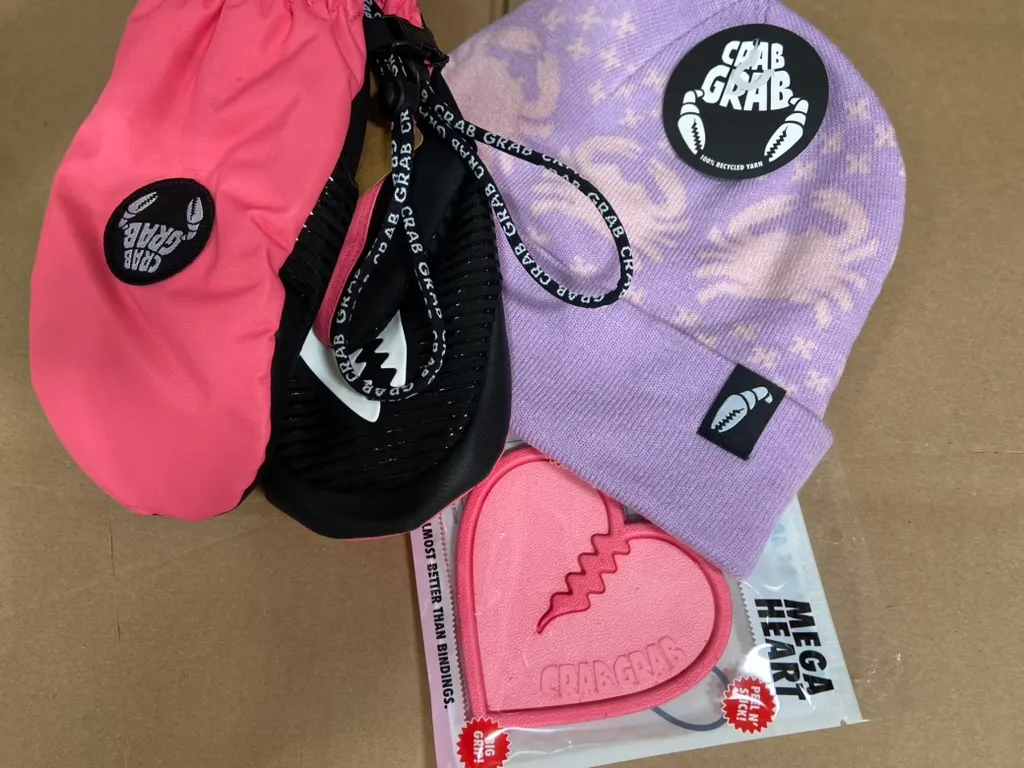
For a brand selling gloves, mitts and accessories, that means hundreds of SKUs moving through a narrow seasonal window where a compliance failure isn't recoverable. You can't reship a missed retail window in February.
What we did
Took control of inbound. Container unloading with SKU-level receiving, inventory reconciliation to clear discrepancies, and warehouse slotting arranged for efficient picking. Inventory accuracy had to exist before fulfillment could be trusted.
Built a compliance framework per retailer. Accurate labeling and carton packing to spec, documentation prepared to each routing guide, and pre-shipment verification before anything left the building. With 115 guides in play, checking at the end is too late.
Shipped the peak. 400+ retail orders in a single month with pick and pack accuracy held across a wide SKU range and shipments aligned to retailer delivery windows.
Handled product issues in-house. Re-tagging, relabeling and quality inspection before outbound, so manufacturer defects got resolved without pulling shipments out of the flow.
Added DTC alongside retail. Ecommerce orders, seasonal spikes and product launches running off the same inventory.
Gave them visibility. Real-time inventory tracking and ongoing reporting through the transition, which matters most when a brand has just been burned by a provider they couldn't see into.
Results
Zero chargebacks during peak season across 115 retailer routing guides.
400+ retail orders shipped in a peak month with accuracy maintained across hundreds of SKUs.
Inventory control restored from inbound container through final delivery.
Product issues resolved without disrupting fulfillment, rather than becoming a reason shipments missed windows.
Retail and DTC running together under one operation.
Why this one matters
One hundred and fifteen routing guides is the number worth sitting with.
Each one is a separate document specifying how that retailer wants shipments labeled, packed, palletized, documented and delivered. They differ from each other in ways that look arbitrary and aren't negotiable. A brand at this scale isn't managing retail compliance as a task, they're maintaining 115 rule sets simultaneously, and every one of them carries financial penalties for getting it wrong.
That's why pre-shipment verification matters more than post-shipment correction. Once a chargeback is deducted, getting it back is rare. The only version of compliance that works is checking before the truck leaves.
Doing it during a 3PL transition, in peak season, is the hard version of the job.
Questions this raises
What is a routing guide? A document each retailer publishes specifying how shipments must be labeled, packed, palletized, routed and scheduled. Following it prevents chargebacks, and every retailer's is different.
Can you switch 3PLs during peak season? It's not ideal, but it's doable and sometimes necessary. It requires inventory validation at receiving rather than inheriting the previous provider's numbers, and compliance verification built in from the first shipment.
How do you manage compliance across many retailers? A verification step before shipments leave, checked against each retailer's specific requirements. At scale you can't rely on staff memory across a hundred different rule sets.
Do you handle re-tagging and relabeling? Yes. Re-tagging, relabeling and quality inspection on sealed packaged product before outbound, which lets manufacturer defects get resolved without stopping fulfillment.
Can you handle seasonal peak volume? Yes, with planning. Seasonal brands concentrate most of their year into a few months, so capacity and workflows get set before the season rather than during it.
Want to learn more?
New Post:
Blog

Why Warehouse Location Is a Margin Decision for Beverage Brands
Warehouse location plays a critical and frequently underestimated role in beverage logistics. Unlike lightweight consumer goods, beverages are heavy, typically palletized, and shipped in high volume, which means distance has an outsized effect on freight cost, delivery speed, product integrity, and retailer compliance.
Read More