
40% Lower Shipping on Oversized Coolers: Bob the Cooler Case Study

Summary
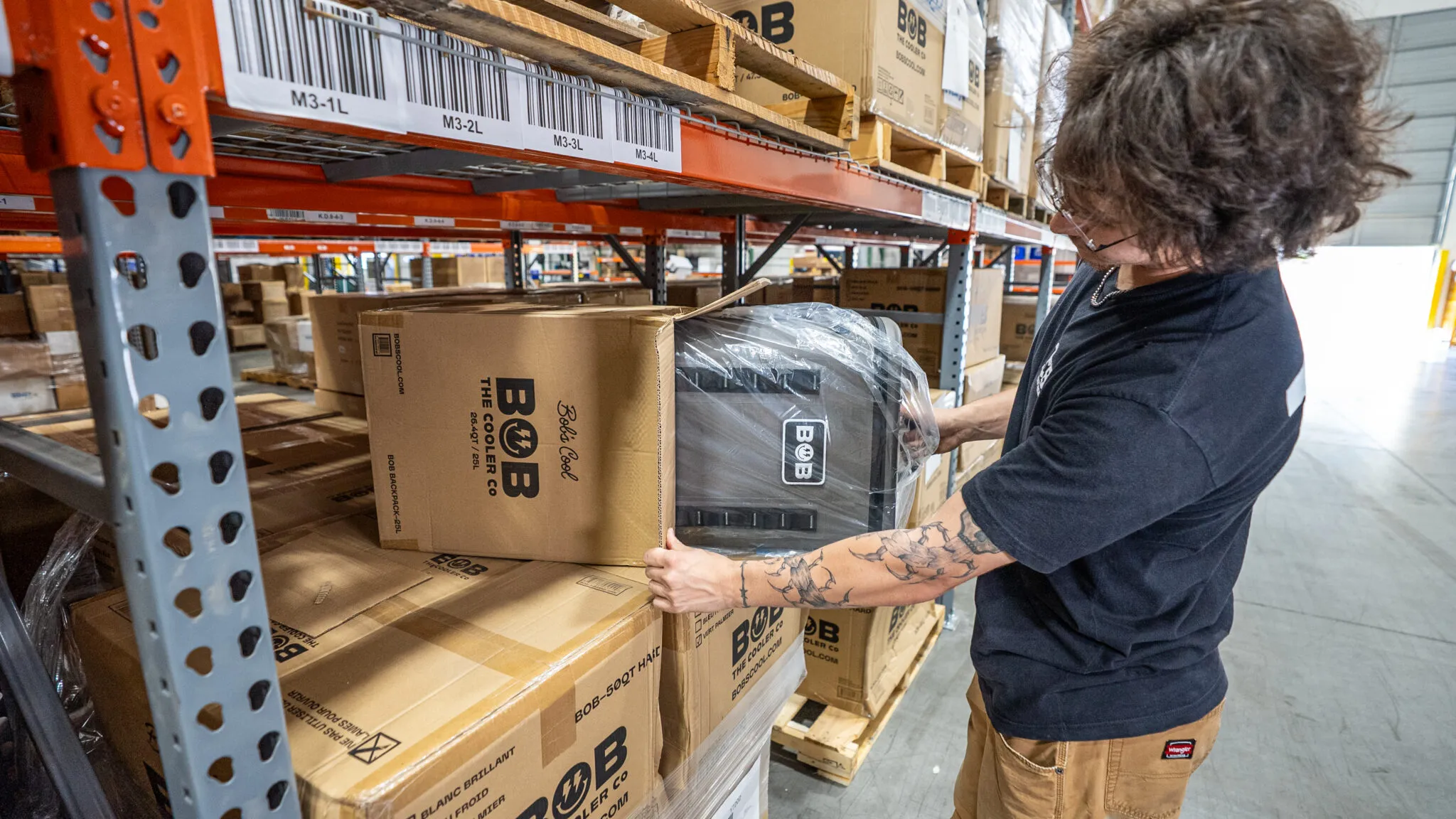
Coolers are the worst-case product for shipping economics: bulky, moderately heavy, and priced by volume rather than weight. Bob's Coolers was growing and shipping cost was growing faster. Packaging, carrier selection and routing changes cut it by nearly 40%.
The situation
Growth doesn't fix a shipping cost problem. It multiplies it.
Bob's Coolers had real demand across both direct-to-consumer and wholesale, with inventory arriving by container from overseas. From outside, everything looked healthy. Inside, every additional order was carrying more cost than it should have.
Coolers make that worse than most products. They're oversized, they weigh enough to matter, and they're priced on dimensional weight, which means carriers bill for the space they occupy rather than what they weigh. A cooler in a slightly-too-large box costs more to ship for reasons that never appear on an invoice as a line item.
Four things were compounding:
Container receiving without structure. Imported inventory arriving without SKU-level verification, which produces miscounts and discrepancies that surface later as fulfillment errors.
Packaging that wasn't matched to the product. The single largest driver of dimensional weight charges.
DTC and B2B running through the same workflow. Two channels with different packing requirements, timelines and compliance standards, handled as one process.
No real-time visibility into inventory or order flow.
None of it was failing. It was just quietly getting more expensive every month.
What we did
Structured the container receiving. Every unit counted, verified at SKU level, labeled and organized before entering active inventory. Import errors caught at the dock rather than discovered in a customer's order.
Rebuilt the shipping strategy around dimensions. Product dimensions, weight profiles and packaging configurations analyzed against carrier pricing structures and zones. The changes came out of that analysis: right-sized packaging to cut dimensional weight, carrier selection matched to shipment profile, and routing chosen on cost rather than habit.
Separated DTC and B2B workflows. Consumer orders built for speed and presentation, wholesale built for retail compliance and larger shipment standards. Running both through one process is what creates the bottlenecks.
Gave them visibility into inventory availability, order status and fulfillment performance.
Results
Shipping cost down nearly 40%, driven by packaging efficiency, carrier selection and routing. On a product where shipping is one of the largest costs in the business, that is a margin change rather than an expense reduction.
Faster order processing, with same-day shipping possible on qualifying orders.
Better inventory accuracy from verification at container receiving.
Both channels running cleanly without competing for the same workflow.
Why this one matters
The 40% didn't come from a rate negotiation. It came from changing what was being billed.
Dimensional weight means carriers charge for volume. A box two inches larger than necessary costs more on every single shipment, forever, and it never shows up as a problem because it's priced into the rate you think is normal. Fixing packaging is permanent and compounding, in a way that a negotiated discount is not.
For any brand shipping bulky product, that's the first place to look: before carrier contracts, before volume discounts.
Questions this raises
Why is shipping so expensive for oversized products? Dimensional weight pricing. Carriers bill on the space a package occupies rather than its weight, so bulky products with light-to-moderate weight are charged as though they were much heavier.
How do you reduce shipping cost on bulky products? Match packaging to actual product dimensions first, then select carriers by shipment profile and optimize routing. Packaging is usually the largest single lever and the one most brands never touch.
Do you receive overseas container shipments? Yes. Containers are received with unit counts, SKU-level verification and labeling before inventory becomes available to sell.
Should DTC and B2B orders run through the same process? No. They have different packing requirements, timelines and compliance standards. Separate workflows drawing from one inventory pool is the structure that works.
When should a brand address shipping cost? Before growth embeds it. Inefficiency at 200 orders a month is an annoyance. The same inefficiency at 2,000 is a permanent part of your cost structure.
Want to learn more?
New Post:
Blog

Why Warehouse Location Is a Margin Decision for Beverage Brands
Warehouse location plays a critical and frequently underestimated role in beverage logistics. Unlike lightweight consumer goods, beverages are heavy, typically palletized, and shipped in high volume, which means distance has an outsized effect on freight cost, delivery speed, product integrity, and retailer compliance.
Read More