
Style, Size, Color, Quantity: High-SKU Apparel Fulfillment for American Socks

Summary
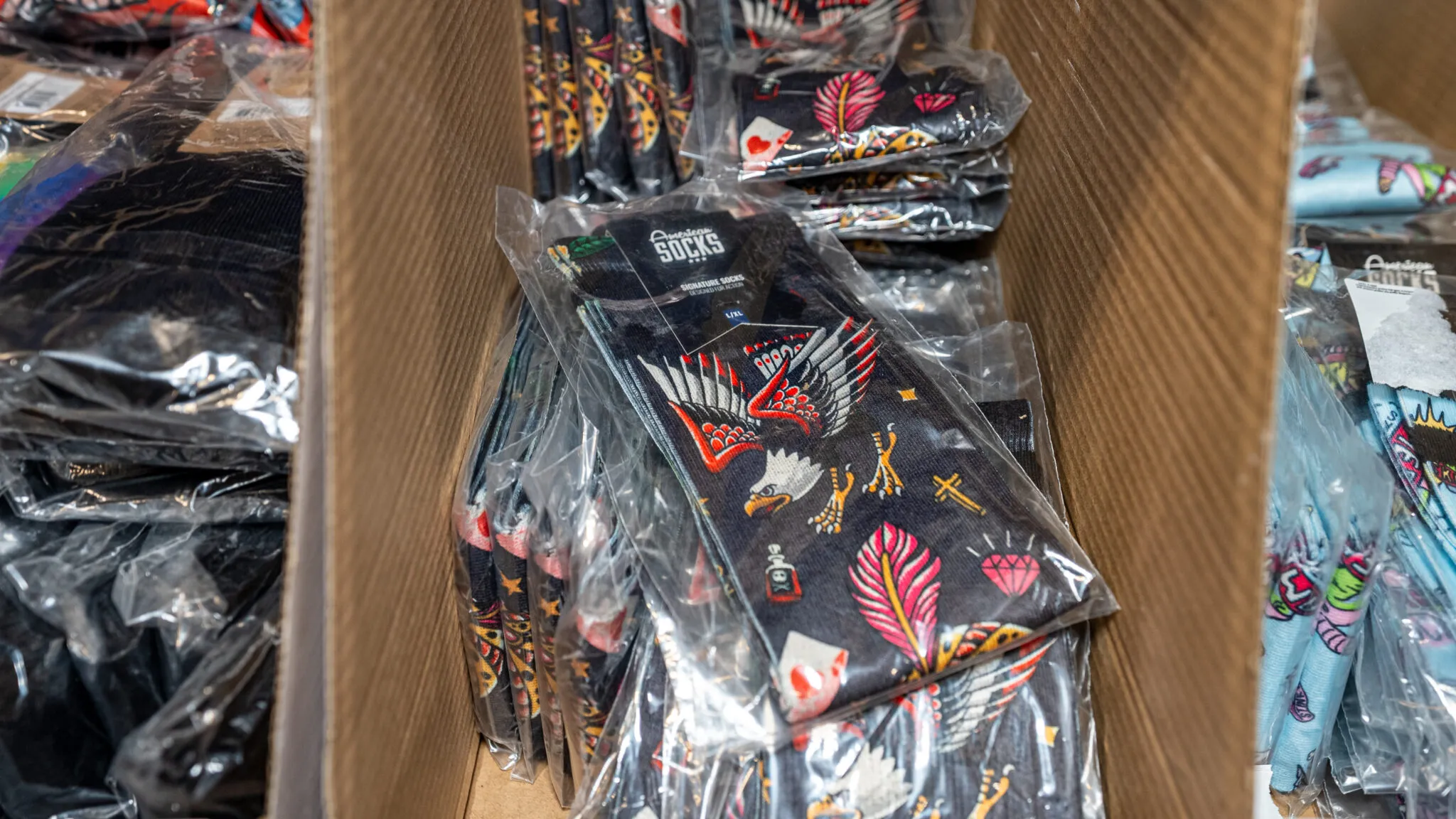
Apparel picking has four ways to go wrong on every order: style, size, color and quantity. American Socks runs multiple styles across size variants with seasonal drops and limited releases. Structured SKU-level workflows kept accuracy steady while volume grew.
The situation
Apparel looks like the easy category. Light, small, cheap to ship, no temperature requirements, nothing fragile.
Then you count the SKUs.
A single sock design becomes four or five SKUs once sizes are counted. Add colorways and the number multiplies again. Add seasonal collections and limited drops, and the catalog grows faster than order volume does. American Socks had all of that, plus a customer base that treats the brand as part of their identity rather than a commodity purchase.
That combination creates a specific risk. Every apparel order has four independent chances to be wrong, and none of them are obvious to the person picking. The right style in the wrong size looks correct in the box. So does the right size in the wrong colorway.
Three pressures were building:
Inventory visibility was slipping as SKU count expanded across styles and sizes, which is how overselling and stock discrepancies start.
Picking risk rose with every new variant. More similar-looking SKUs in the same pick zone means more opportunities to grab the wrong one.
Packaging consistency mattered more than usual. For a lifestyle brand, the unboxing is part of what the customer bought. Inconsistent presentation reads as the brand slipping.
Nothing had broken. The warning signs were showing, which is the right time to act.
What we did
Centralized inventory control. All inventory organized with SKU-level tracking, real-time stock visibility and accurate counting, so available-to-sell reflects what physically exists.
Built picking workflows for high-SKU environments. SKU-level verification, standardized picking procedures and accuracy checkpoints before pack-out. The checkpoint matters most in apparel, because a wrong-size pick passes a visual check.
Standardized pack-out. Consistent packing method on every order, so presentation doesn't vary by who packed it or how busy the day was.
Set the operation up to absorb drops. Product launches and limited releases concentrate demand into hours rather than spreading it across a week, which is a different problem from steady volume.
Results
Inventory accuracy held as SKU count grew, with visibility into what's available across styles and sizes.
Order accuracy improved. Customers received the correct style, size and variant, which for apparel is the main driver of avoidable returns.
Faster processing without loosening the accuracy standard.
Consistent presentation on every shipment, treated as a brand touchpoint rather than a packing task.
Room to grow without fulfillment becoming the constraint on the next drop.
Why this one matters
Apparel has some of the highest return rates in ecommerce, and a meaningful share of them are avoidable. Fit-driven returns are the brand's problem. Wrong-item returns are the warehouse's.
The difference shows up in the return rate. A brand doing 15% returns on footwear is dealing with fit. A brand doing 15% where a third of those are wrong items is paying twice: once for the outbound error and again for the return processing.
That's why the accuracy checkpoint before pack-out earns its cost in apparel specifically. In most categories a wrong pick is obvious. Here it isn't.
Questions this raises
What makes apparel fulfillment harder than it looks? SKU count. Every style multiplies across sizes and colorways, so a modest catalog becomes hundreds of SKUs that look similar in a pick zone. Four attributes have to be right on every order.
How do you prevent wrong-size and wrong-variant picks? SKU-level verification and an accuracy checkpoint before pack-out. Visual checks alone don't catch size errors, because the wrong size looks like the right product.
Can you handle product drops and limited releases? Yes. Drops concentrate a week of volume into hours, so staffing and pick paths get set before the launch rather than reacting during it.
Does packaging presentation matter for fulfillment? For lifestyle apparel, yes. Customers treat the unboxing as part of the product. Standardized pack-out keeps it consistent regardless of volume that day.
How do you avoid overselling with high SKU counts? Real-time inventory sync between the store and the warehouse. Overselling usually traces to stock counts that drift from physical reality across many similar SKUs.
Want to learn more?
New Post:
Blog

Why Warehouse Location Is a Margin Decision for Beverage Brands
Warehouse location plays a critical and frequently underestimated role in beverage logistics. Unlike lightweight consumer goods, beverages are heavy, typically palletized, and shipped in high volume, which means distance has an outsized effect on freight cost, delivery speed, product integrity, and retailer compliance.
Read More