
Holding Inventory Stateside When Tariffs Move: American Mentality Case Study

Summary
American Mentality imports bikes, which meant tariff exposure and customs timelines they couldn't predict. Consolidating inventory into a US distribution hub moved the uncertainty upstream: once product is stateside and counted, delivery to customers stops depending on what's happening at a port.
The situation
When your product crosses a border before it reaches a customer, trade policy becomes an operating variable rather than a news story.
American Mentality was growing a bike brand on imported products. Tariff increases pushed landed costs up. Customs and international shipping timelines moved unpredictably, which made inventory planning guesswork. And with no centralized US warehousing, there was nowhere to absorb any of it.
The result was exposure at both ends. Cost was unpredictable because tariffs shifted. Availability was unpredictable because arrival dates shifted. Neither is something a retail partner or a DTC customer will tolerate for long.
They also had limited ability to serve direct-to-consumer orders, which meant the fastest-growing channel was the hardest one to support.
What we did
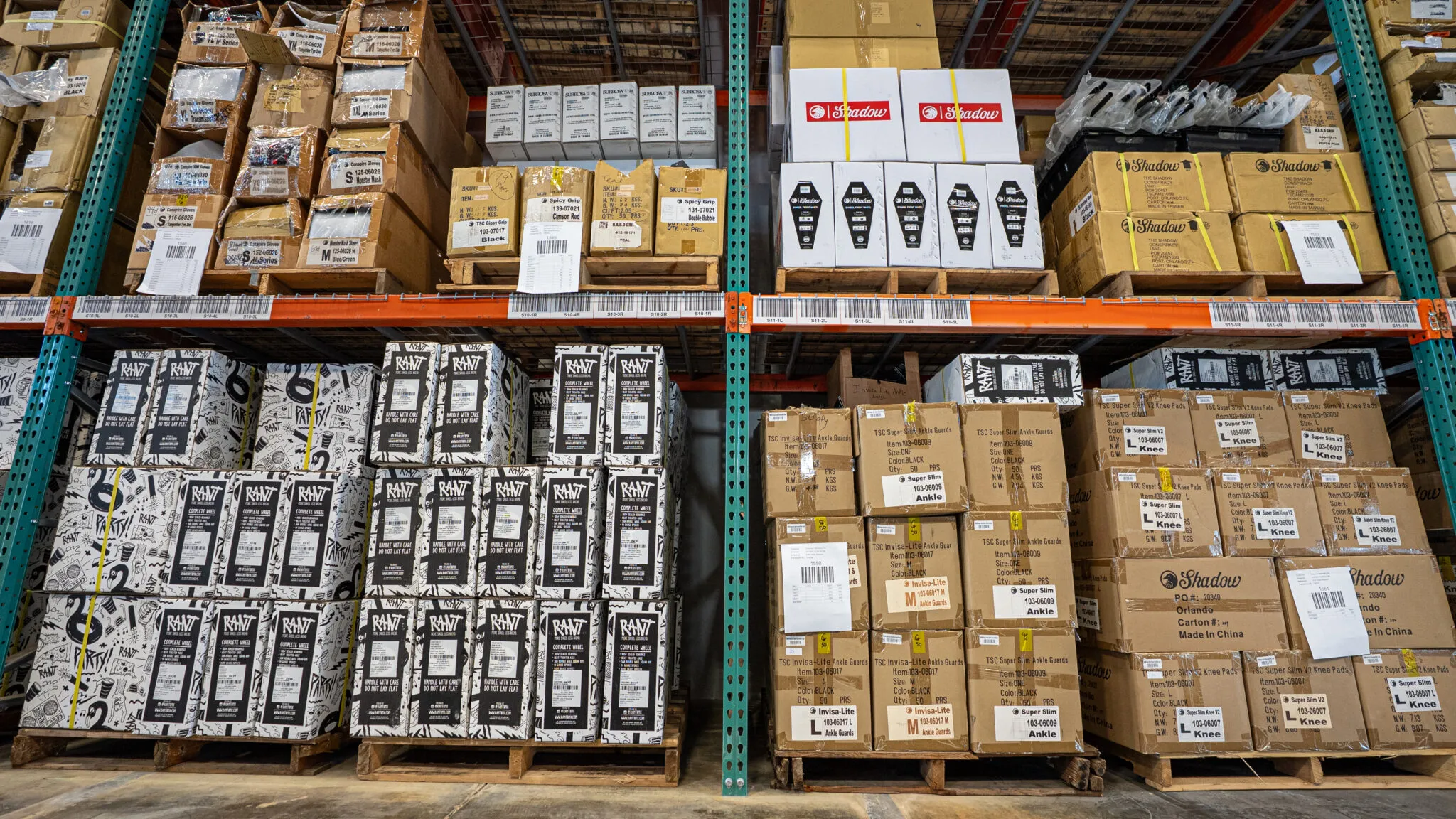
Set up a US distribution hub. Imported product received, palletized and stored domestically, with structured intake and SKU-level inventory management. Once inventory is in the building and counted, it's available regardless of what the next container is doing.
Put it in a WMS with real visibility. Real-time inventory tracking, barcode scanning at each stage, order status monitoring and shipment tracking. That visibility is what lets a brand make pricing and allocation decisions against real stock rather than estimates.
Built DTC fulfillment on top of it. Pick and pack workflows, outbound scanning as a quality check, secure packaging for high-value products, and same-day or next-day shipping where the order qualifies.
Aligned sourcing with the distribution plan. Import and production timing planned against domestic stock levels rather than in isolation.
Results
Cost predictability. Landed cost is known once product is stateside, so pricing decisions aren't being made against a moving number.
Less dependence on international timing. Domestic inventory absorbs the variability in shipping and customs rather than passing it to customers.
Real-time inventory visibility across the operation, supporting allocation and planning decisions.
DTC fulfillment without internal infrastructure, including same-day and next-day where applicable.
Stronger position with retail partners, who care more about consistent availability than about why a shipment was late.
Why this one matters
The instinct when tariffs rise is to renegotiate with suppliers or chase a cheaper country of origin. Both take months and both can be undone by the next policy change.
Domestic inventory is a different kind of answer. It doesn't lower the tariff. It changes when you're exposed to it and how much warning you get, which is what actually makes a business plannable. A brand holding three months of stock stateside has three months to react to a change. A brand shipping just-in-time from overseas has none.
That's also why import timing and domestic stock levels should be planned together rather than by separate teams.
Questions this raises
How does a US distribution center help with tariffs? It doesn't reduce the tariff. It gives you domestic inventory as a buffer, so cost is known once product lands and availability stops depending on the next shipment clearing customs.
What is landed cost? The total cost of getting a unit into your warehouse ready to sell: unit price plus freight, duty, customs fees, drayage and inland transport. It's the number that should drive pricing, not the supplier's quote.
Can you receive imported containers? Yes. Structured receiving with counts, SKU-level verification and palletization before inventory becomes available to sell.
How much domestic inventory should an importing brand hold? Enough to cover the longest realistic delay in your lane plus your reorder cycle. The right number depends on your product's value and how much working capital you can hold, which is the tradeoff worth modeling before a disruption rather than during one.
Can you support both DTC and retail from imported inventory? Yes. One domestic inventory pool serving both channels, which is what keeps a retail PO from consuming stock the DTC channel was counting on.
Want to learn more?
Let TCB show you we can manage your tricky fulfillment situations!
New Post:
Blog

Why Warehouse Location Is a Margin Decision for Beverage Brands
Warehouse location plays a critical and frequently underestimated role in beverage logistics. Unlike lightweight consumer goods, beverages are heavy, typically palletized, and shipped in high volume, which means distance has an outsized effect on freight cost, delivery speed, product integrity, and retailer compliance.
Read More