
Why WMS Accuracy Matters More Than Ever for DTC Beverage Brands

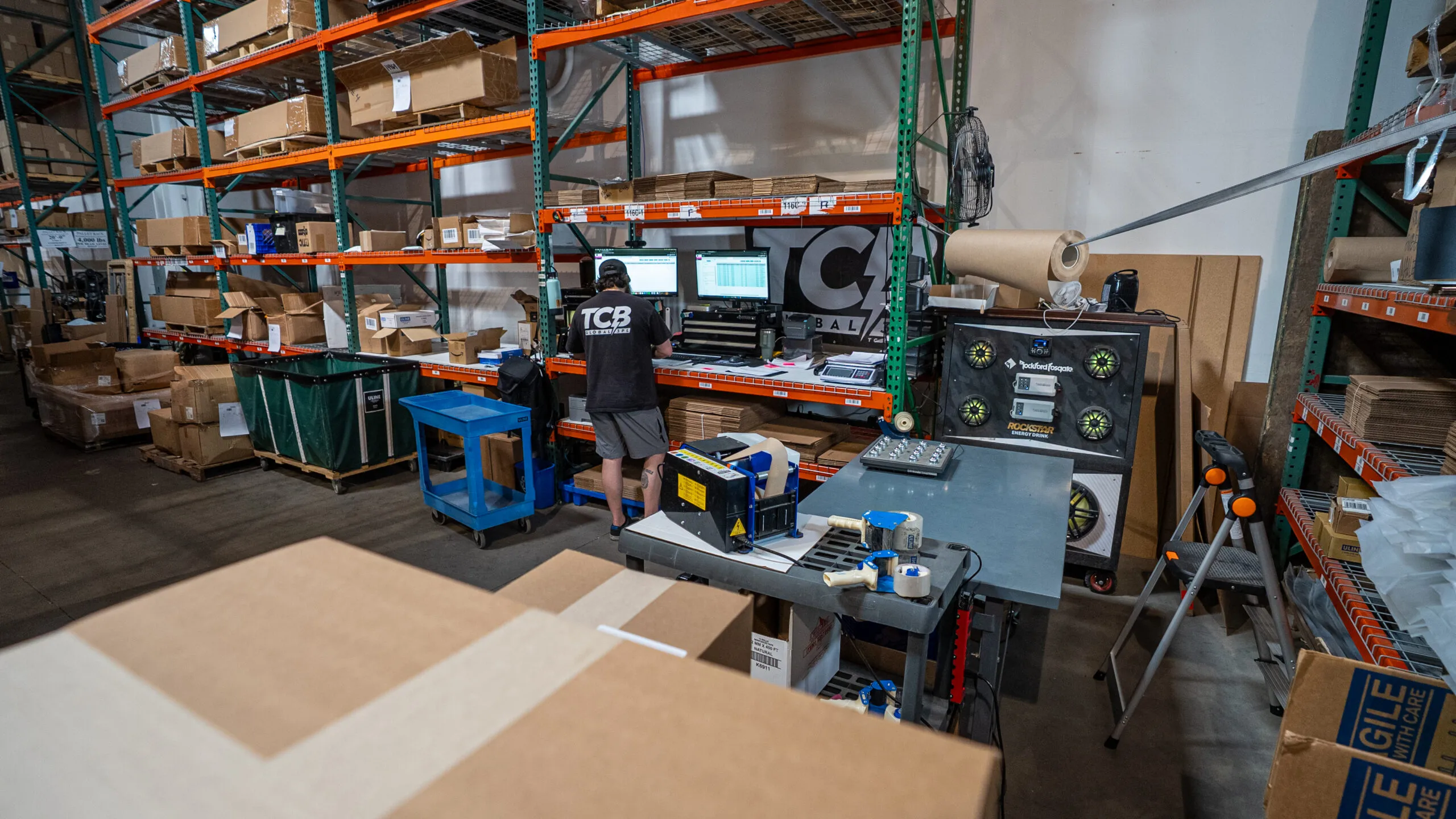
Direct-to-consumer beverage brands operate in a fulfillment environment that demands speed, precision, and full visibility, and customers expect fast shipping, accurate orders, and real-time stock availability as a baseline, not a differentiator. When inventory data is wrong, the downstream effects compound quickly: overselling, delayed orders, stockouts, and eroding customer trust.
Why Inventory Accuracy Is a Revenue Issue, Not Just an Operations Issue
Many beverage brands manage inventory through basic systems or manual tracking in their early stages, and that approach can work fine at low volume. It becomes unsustainable quickly as order volume increases, SKU counts expand, and distribution channels multiply. A small inaccuracy in inventory counts can cascade into hundreds of incorrect orders, cancellations, and lost revenue once it's operating at scale.
The stakes are higher still for beverage brands managing fragile, liquid, and variant-heavy product lines. Overselling a limited-run flavor or running out of a core SKU during a promotion can disrupt sales momentum and damage credibility with customers who were specifically excited about that release. Without a reliable warehouse management system (WMS), these gaps are difficult to detect early and even harder to prevent.
A Fulfillment Infrastructure Built Around Real-Time Accuracy
TCB Global operates fulfillment centers in Orlando, Florida and Las Vegas, Nevada, and this dual-location structure only works as an advantage if inventory accuracy is maintained consistently across both facilities. A multi-warehouse strategy that loses sync between locations creates more risk than a single-location operation, not less.
TCB Global manages inventory and order visibility through Extensiv, its warehouse management system, providing real-time tracking of inventory movement, order processing, and stock levels across both facilities. This gives brands the ability to monitor availability, manage promotions, and plan production with actual current data rather than a periodic snapshot.
What Happens Without a Reliable WMS
A warehouse management system is the operational backbone that makes consistent fulfillment possible at scale. Without accurate underlying data, even a well-run fulfillment team can't maintain consistency. Orders get processed against inventory that's no longer actually available, resulting in cancellations and frustrated customers, and promotions can drive demand beyond what's actually in stock, creating a fulfillment backlog that didn't need to happen.
Why Variant-Heavy Beverage Catalogs Make This Harder
For DTC beverage brands managing multiple flavors, package sizes, and limited-run releases, WMS precision matters more than it would for a simpler product catalog. Variant-heavy product lines increase the likelihood of picking errors and stock discrepancies if inventory isn't tracked at the specific SKU level with clear location mapping. A generic inventory system that treats every variant the same way tends to accumulate small errors that are individually minor but collectively significant.
Why Multi-Warehouse Operations Raise the Stakes Further
Splitting inventory between Orlando and Las Vegas adds real efficiency for shipping cost and delivery speed, but it also means both locations have to stay synchronized in real time to prevent overselling or stock imbalances between them. A WMS that updates stock levels across both facilities as transactions happen, not on a delay, is what makes it possible to allocate inventory strategically across locations without losing accuracy in the process.
Questions Brands Ask When Inventory Accuracy Becomes a Problem
- Why do we keep overselling certain SKUs even though our system shows stock available?
- Why does our website show inventory that isn't actually available to ship?
- How do we prevent stockouts specifically during high-demand promotions?
- Can we actually trust our inventory numbers across every sales channel simultaneously?
- What happens to accuracy when inventory is split across more than one warehouse?
- How do we maintain accuracy as order volume and SKU count keep increasing?
Why These Questions Usually Point to the Same Root Cause
These questions typically indicate that an existing system (manual tracking, delayed updates, disconnected sales channels) is no longer sufficient for the brand's current scale. The gap between actual inventory and what's reported as available widens as order volume grows, and that gap is exactly what a real-time WMS is built to close.
How TCB Global Supports Multi-Channel Inventory Accuracy
TCB Global centralizes inventory management across DTC, retail, wholesale, and subscription channels within Extensiv, updating stock levels in real time so allocation stays accurate without manual reconciliation between channels. This matters specifically because these channels typically draw from the same physical inventory pool. A retail order that isn't tracked against the same real-time count as DTC sales can quietly deplete stock a brand didn't realize was already spoken for.
Inventory is tracked at the SKU level with structured location mapping and controlled handling procedures, which reduces discrepancies and keeps products stored and picked accurately even across a large variant catalog. Integrated reporting gives brands visibility into inventory performance and fulfillment metrics directly, rather than requiring a manual request each time a status check is needed.
What Changes as Order Volume and SKU Count Grow
As a beverage brand adds SKUs, channels, and order volume, the cost of an inventory accuracy gap grows with it. A small discrepancy that was a minor inconvenience at lower volume becomes a much more visible and expensive problem once it's multiplied across a larger, more complex operation. Brands scaling quickly should treat inventory accuracy as a metric worth actively monitoring at each growth stage, rather than assuming a system that worked at an earlier size will continue to hold up without another look.
Why Accurate Inventory Data Supports Better Forecasting, Not Just Fewer Errors
The value of a reliable WMS goes beyond preventing individual order errors. It also changes the quality of the decisions a brand can make about replenishment, promotions, and expansion. When inventory numbers can actually be trusted, forecasting stops being a guessing exercise built on periodic manual counts and becomes a real planning tool grounded in current data. That operational clarity tends to reduce the kind of reactive, last-minute scrambling that comes from discovering a stock problem only after it's already affected customers.
FAQs
Why do DTC beverage brands keep overselling certain SKUs?
Usually because inventory data isn't updated in real time across every sales channel, so the system shows stock as available when it's already been sold or allocated elsewhere.
What is a WMS, and why does it matter for beverage brands specifically?
A warehouse management system tracks inventory movement, order processing, and stock levels in real time. It matters more for beverage brands because variant-heavy, limited-run product lines increase the risk of picking errors and stock discrepancies without SKU-level precision.
How does multi-warehouse fulfillment affect inventory accuracy?
It adds complexity. Inventory split across locations has to stay synchronized in real time, or the brand risks overselling from one location while the other still shows stock available.
Can a WMS prevent overselling during high-demand promotions?
Yes, provided it updates stock levels in real time across every channel. A system with delayed updates can still show inventory as available after it's already been sold elsewhere.
What WMS does TCB Global use?
TCB Global manages inventory and order visibility through Extensiv across its Orlando and Las Vegas facilities.
How does TCB Global prevent multi-channel inventory conflicts?
By centralizing inventory management across DTC, retail, wholesale, and subscription channels within one system, with real-time stock updates that support accurate allocation across all of them simultaneously.
If overselling, stockouts, or inventory mismatches across channels are cutting into revenue, contact TCB Global to review how your current inventory system compares to a real-time WMS-backed operation.
Want to learn more?
Check out how TCB can help you reduce costs and fulfill your beverage brand! (click here)
Heading 1
Heading 2
Heading 3
Heading 4
Heading 5
Heading 6
Lorem ipsum dolor sit amet, consectetur adipiscing elit, sed do eiusmod tempor incididunt ut labore et dolore magna aliqua. Ut enim ad minim veniam, quis nostrud exercitation ullamco laboris nisi ut aliquip ex ea commodo consequat. Duis aute irure dolor in reprehenderit in voluptate velit esse cillum dolore eu fugiat nulla pariatur.
Block quote
Ordered list
- Item 1
- Item 2
- Item 3
Unordered list
- Item A
- Item B
- Item C
Bold text
Emphasis
Superscript
Subscript
New Post:
Case Study

How F*ck Cancer Runs a Seven-Festival Tour Without a Logistics Team
F*ck Cancer brings cancer awareness to major music festivals through an activation tent. Their team sets it up and tears it down. Since 2024 we've handled everything behind that: routing, freight, delivery, pickup and storage between shows across seven festivals.
Read More