
Why Your Orders Are Delayed (And Why It's Probably Not Your Carrier)

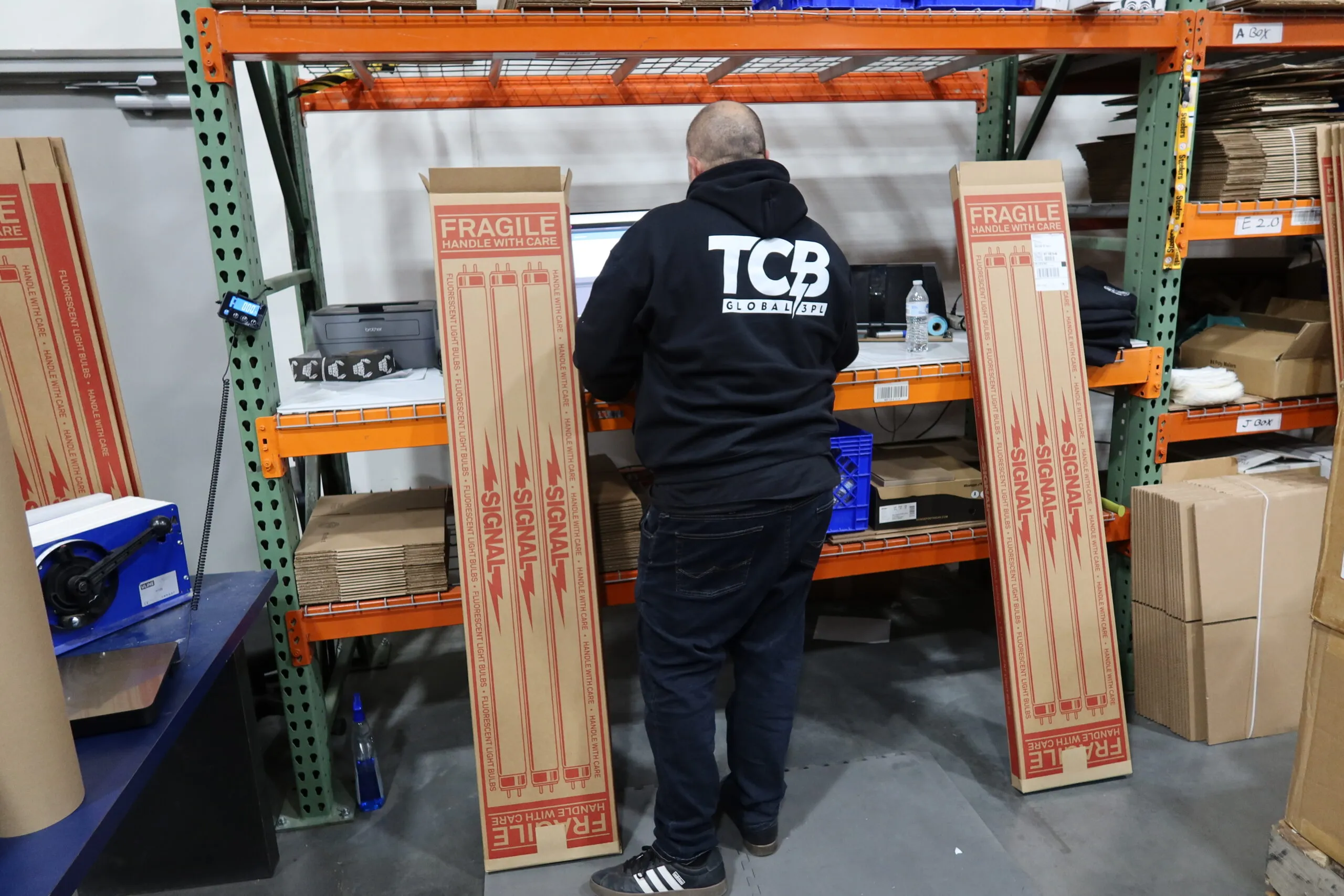
When orders start arriving late, the instinct is to look outward: the carrier is slow, the shipping network is backed up, service has gotten less reliable. That reaction makes sense, since the carrier is the last visible touchpoint before a customer sees the delay. But in most cases, the carrier isn't the root cause. By the time an order reaches a carrier, the outcome has largely already been determined.
Why the Carrier Usually Gets Blamed First
Carriers deliver whatever the warehouse hands them. If an order leaves late, incorrect, poorly packaged, or missing required documentation, the carrier isn't fixing any of that. It's simply delivering the result of what already happened upstream. That means the first place to look when orders are consistently delayed isn't the shipping partner. It's the fulfillment operation itself.
Where Delays Actually Start: Six Causes, Each With a Way to Self-Diagnose
Delays originate at a specific point in the fulfillment process, and each point tends to produce a recognizable symptom. Matching the symptom to the cause below is a faster way to diagnose a delay pattern than reviewing carrier performance data first.
1. Receiving
Delays that start here happen before product is even available to sell or ship: inbound shipments that sit unprocessed, or that take too long to check in against purchase orders and log into the system.
Symptom to watch for: inventory that's physically on-site but not yet reflected as available in the system, causing orders against that SKU to stall or get held even though the product has technically arrived.
2. Putaway
Even after receiving is complete, product has to be moved into a pickable location. Delays here happen when putaway is slow, inconsistent, or when product is stored somewhere other than its designated slot.
Symptom to watch for: a SKU shows as in-stock and received, but pickers can't locate it quickly, or it's found in the wrong location. That's a gap between what the system says and where the product actually sits on the shelf.
3. Inventory Inaccuracy
When the system shows inventory as available but it isn't actually in the expected location or quantity, orders stall. Staff search for product, substitutions get made, orders get split or delayed while the discrepancy gets sorted out.
Symptom to watch for: recurring "can't locate" or short-pick exceptions during picking, or orders that get manually adjusted or canceled due to a stock discrepancy discovered after the order was placed.
4. Cutoff Times
Cutoff times determine whether an order ships today or tomorrow, and early, inconsistent, or poorly communicated cutoffs quietly cost a full day on any order that just misses the window.
Symptom to watch for: orders placed comfortably before what should be a same-day cutoff are still going out the next day, or ship dates cluster suspiciously close to the cutoff boundary rather than being spread across the day.
5. Carrier Pickup
This is one of the few real points where a carrier can be the actual source of a delay. A missed, late, or inconsistent pickup window leaves already-completed orders sitting at the dock instead of moving.
Symptom to watch for: orders marked "shipped" or "ready" in the system on time, but with a gap of a day or more before the tracking number shows an actual carrier scan. That gap is dock time, not warehouse processing time.
6. Capacity
As order volume increases (during a promotion, a seasonal peak, or simply organic growth), a warehouse's processing capacity can be exceeded even when every individual process is well designed, simply because there isn't enough labor or throughput to keep pace.
Symptom to watch for: delays that appear or worsen specifically during high-volume periods and largely disappear once volume normalizes. That's a strong signal that the issue is capacity rather than a fundamentally broken process.
Why Single-Location Shipping Compounds All Six of These
None of the six causes above are unique to a single-location operation, but a warehouse shipping nationally from one location has less slack to absorb any of them. A receiving backlog, a cutoff miss, or a capacity crunch at the only facility affects every order nationwide simultaneously, rather than being contained to whichever region a second location would otherwise be covering. Positioning inventory across more than one facility doesn't eliminate these six failure points, but it reduces how much of the country is exposed to any single one of them at once.
A Faster Way to Diagnose Than Reviewing Carrier Data First
Before assuming a carrier is underperforming, it's worth walking through these six causes in order and checking for the specific symptom associated with each. This tends to isolate the actual bottleneck faster than starting with carrier scorecards, since five of the six causes above have nothing to do with the carrier at all. For a broader operational check beyond delay diagnosis specifically, TCB Global's 3PL audit checklist covers the same ten questions worth asking about any fulfillment partner, including several of these same failure points.
Why Delays Get Worse as a Brand Scales
At lower volume, delays are manageable. Issues get fixed manually, orders get pushed through, adjustments happen on the fly. As volume increases, those small inefficiencies multiply rather than stay flat, and what used to be an occasional minor delay becomes a consistent pattern. At that point the impact compounds: customers start noticing, support tickets increase, reviews decline, and retail partners lose confidence. At scale, delays stop being a purely operational issue and become a brand-reputation issue.
Questions to Ask When Diagnosing Delayed Orders
- How long do orders actually sit between being placed and being picked, packed, and staged for shipment?
- How often do inventory discrepancies require a substitution, split shipment, or manual search before an order can ship?
- What are our current order cutoff times, and how consistently are they actually met?
- What percentage of orders are shipping long distances from a single location, and how much transit time does that add?
How TCB Global Approaches Delays at the Source
Rather than chasing faster shipping as the fix, TCB Global focuses on the system that determines shipping speed in the first place, because when that system works, delivery improves as a natural result rather than requiring a workaround.
Operational discipline inside the warehouse: structured workflows across receiving, picking, packing, and shipping designed to prioritize both speed and accuracy without bottlenecks.
Real-time inventory accuracy: inventory tracked and verified at every step, which reduces the delays caused by searching for product or correcting discrepancies after the fact.
Optimized order flow: orders routed and processed based on efficiency logic rather than guesswork, supporting consistent throughput even during high-volume periods.
Strategic warehouse placement: with facilities in Orlando, Florida and Las Vegas, Nevada, orders can ship from whichever location is closer to the customer rather than forcing every shipment across the full width of the country.
What Changes When the System Is Fixed at the Source
When delays are addressed at their actual origin rather than patched with faster (and more expensive) shipping tiers, the improvement tends to show up across the board: orders ship on time, delivery windows stabilize, customer satisfaction increases, support requests decrease, and operations become predictable rather than reactive. The team stops managing a recurring crisis and starts operating strategically instead.
Why Expedited Shipping Is a Symptom, Not a Fix
A common response to rising delivery complaints is to upgrade more orders to expedited shipping, which can mask a warehouse-side delay for a while at real cost. Faster shipping doesn't address why the order was late leaving the building in the first place. It just compresses the timeline on the back end to compensate. Brands that lean on expedited shipping as a standing fix, rather than a rare exception, are usually paying to hide a process problem rather than solving it, and that expense tends to grow as order volume increases rather than shrink.
How to Tell Whether a Specific Delay Started in the Warehouse or on the Road
A useful diagnostic is comparing the timestamp an order was placed against when it actually left the facility, separate from when it was delivered. If the gap between order placement and shipment is consistently longer than it should be, the delay is originating inside the warehouse regardless of how the carrier performs afterward. Tracking this specific metric (time from order to ship, not just time from ship to delivery) tends to reveal the real bottleneck much faster than reviewing carrier performance data alone.
FAQs
Why are my orders delayed even though I'm paying for fast shipping?
Most delays happen inside the warehouse before the order ever reaches the carrier. A fast shipping tier can't make up for time already lost to slow receiving, putaway, inventory inaccuracy, or a missed cutoff.
What are the most common points where fulfillment delays originate?
Six recurring points: receiving, putaway, inventory inaccuracy, cutoff times, carrier pickup, and capacity. Each produces its own recognizable symptom worth checking for specifically.
How can I tell if a delay is a carrier problem or a warehouse problem?
Check the gap between when an order is marked shipped and when the carrier actually scans it. A multi-day gap points to carrier pickup. If that gap is small, the delay is almost certainly upstream in the warehouse instead.
Does warehouse location affect delivery time?
Yes. Shipping from a location closer to the customer reduces transit time, but it doesn't eliminate delays caused by receiving, putaway, inventory, cutoffs, or capacity constraints inside the warehouse itself.
How does TCB Global address order delays?
Through structured processes at each of the six failure points (receiving, putaway, inventory accuracy, cutoff management, carrier coordination, and capacity planning) across its Orlando and Las Vegas facilities.
If your orders are consistently arriving later than promised, contact TCB Global to walk through these six causes against your own operation and find out where the delay is actually starting.
Want to learn more?
Learn more about how TCB can help your business scale and reduce delays! (click here)
Heading 1
Heading 2
Heading 3
Heading 4
Heading 5
Heading 6
Lorem ipsum dolor sit amet, consectetur adipiscing elit, sed do eiusmod tempor incididunt ut labore et dolore magna aliqua. Ut enim ad minim veniam, quis nostrud exercitation ullamco laboris nisi ut aliquip ex ea commodo consequat. Duis aute irure dolor in reprehenderit in voluptate velit esse cillum dolore eu fugiat nulla pariatur.
Block quote
Ordered list
- Item 1
- Item 2
- Item 3
Unordered list
- Item A
- Item B
- Item C
Bold text
Emphasis
Superscript
Subscript
New Post:
Case Study

How F*ck Cancer Runs a Seven-Festival Tour Without a Logistics Team
F*ck Cancer brings cancer awareness to major music festivals through an activation tent. Their team sets it up and tears it down. Since 2024 we've handled everything behind that: routing, freight, delivery, pickup and storage between shows across seven festivals.
Read More