
The Real Cost of Distance: Zones, Zone Skipping, and the Two-Node Coverage Math

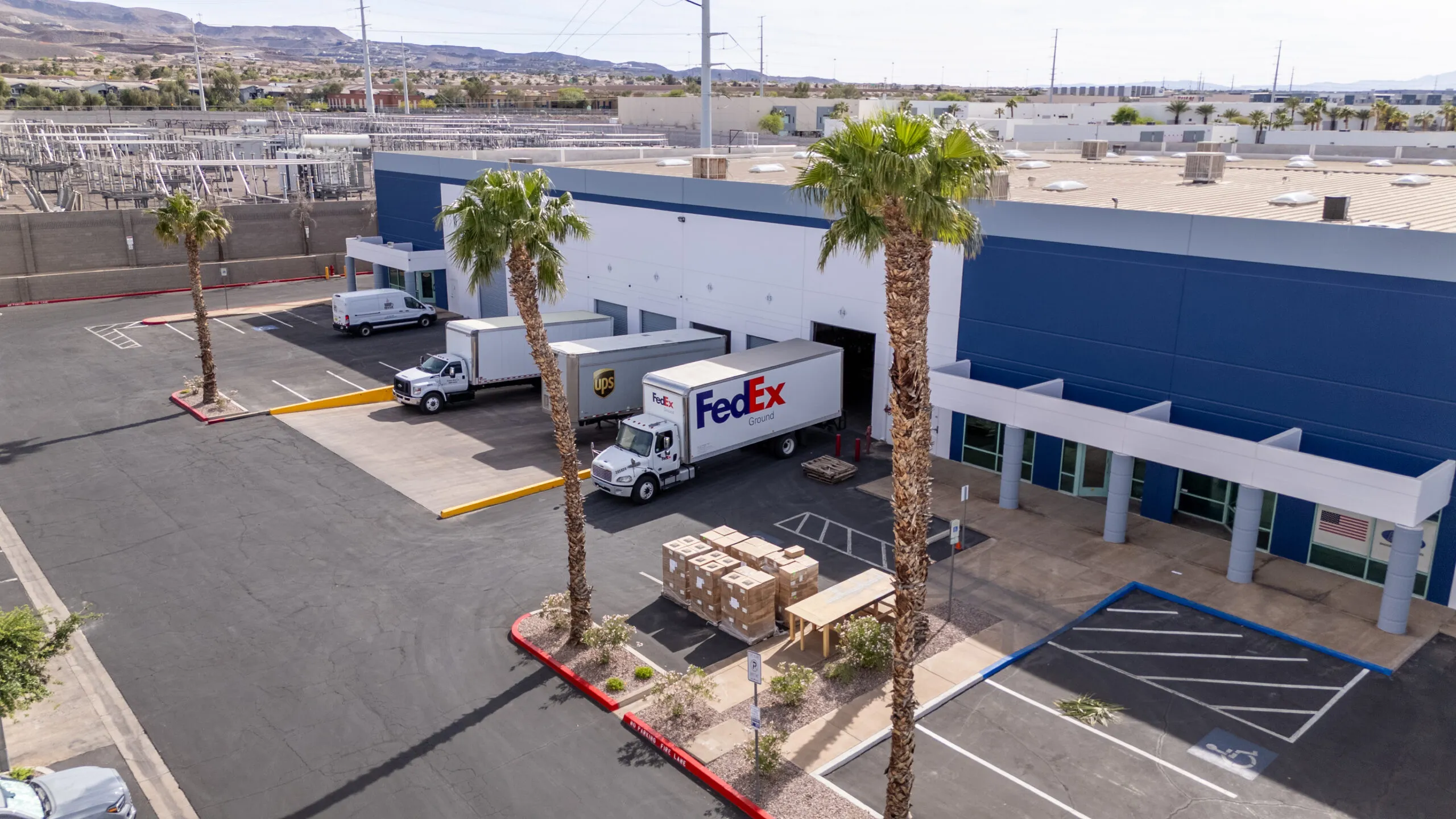
Two-day shipping used to be a competitive edge. Now it's closer to a baseline expectation, and for a lot of brands it's quietly become one of the bigger drains on margin. Orders move, customers seem satisfied, delivery speeds look fine on paper, but shipping costs creep up, margins tighten, and eventually the question becomes: we're growing, so why does it feel like we're making less?
Why 2-Day Shipping Isn't the Problem. Distance Is.
Speed itself isn't the problem. Forcing two-day delivery with the wrong infrastructure is. Most brands hit their delivery targets by shipping long distances, upgrading to expensive air or premium ground service, or rushing fulfillment processes. That's not a strategy, it's a workaround, and workarounds get expensive fast. The actual lever that controls both cost and speed is distance, which is exactly what carrier shipping zones are built to measure.
How Shipping Zones Actually Work
Parcel carriers (USPS, UPS, FedEx) price and route shipments using zones: numbered bands based on the distance between the origin and destination ZIP code, not a flat national rate. All three major carriers use a similar structure, typically zones 2 through 8 for the contiguous U.S., though the exact ZIP-to-zone mapping differs slightly by carrier.
Zone 1 is local (within about 50 miles). Zone 2 covers roughly 51–150 miles, Zone 3 151–300, Zone 4 301–600, Zone 5 601–1,000, Zone 6 1,001–1,400, Zone 7 1,401–1,800, and Zone 8 anything beyond 1,800 miles. Exact ZIP-to-zone mapping varies slightly by carrier, so treat these as the general industry pattern rather than one carrier's exact chart.
Zones Reached From TCB Global's Orlando, Florida Facility
From Orlando, Miami lands in Zone 3; Atlanta and Charlotte in Zone 4; Washington, DC and Houston in Zone 5; New York, Chicago, Dallas and Boston in Zone 6; Denver in Zone 7; and Phoenix, Los Angeles, San Francisco and Seattle in Zone 8. These are based on approximate driving distances, not exact carrier ZIP-to-ZIP figures.
Zones Reached From TCB Global's Henderson, Nevada Facility
The same exercise from Henderson looks close to a mirror image: short zones to the West, long zones to the East.
From Henderson, Los Angeles and Phoenix land in Zone 3; San Diego, Salt Lake City and San Francisco in Zone 4; Denver and Portland in Zone 5; Seattle and Dallas in Zone 6; Chicago in Zone 7; and Atlanta, Orlando, Washington, DC and New York in Zone 8.
What a Zone Jump Actually Costs
Carriers charge more per zone almost linearly, and the gap between a short and long zone is larger than most shippers assume. Based on published 2026 base-rate examples for a 1 lb package shipped via USPS Ground Advantage, the rate runs roughly $4.50 at Zone 2, $5.00 at Zone 4, $5.80 at Zone 6 and $7.20 at Zone 8, about a 60% increase from Zone 2 to Zone 8. These are illustrative published retail rates (from a third-party rate table analysis), not TCB Global's negotiated carrier rates, and actual account pricing varies.
The Spread Widens for Heavier Packages
The pattern above understates the impact for heavier shipments. Published examples for a 5 lb package via USPS Ground Advantage run roughly $7.50 at Zone 2 versus $14.00 at Zone 8, nearly double, not just 60% more. UPS Ground follows a similar shape: a 2 lb package runs roughly $9.50 at Zone 2 versus $15.00 at Zone 8. The heavier and more zone-distant a shipment is, the more a positioning problem shows up directly on the invoice.
How Zone Skipping Changes This Math
Zone skipping is a specific technique for reducing this cost without moving a warehouse: consolidating multiple parcels bound for the same region into a single bulk shipment (moved by truckload or LTL freight), transporting that consolidated load to a regional hub near the destination customers, and then inducting the individual parcels into the carrier's local delivery network from there.
The effect is that a package which would otherwise be billed as a long-haul, high-zone parcel shipment is instead billed for a much shorter, lower-zone local delivery, with the long-distance leg handled more cheaply as consolidated freight rather than as individual parcels. This works best where there's real volume concentrated toward a specific region. A fulfillment partner that consolidates freight across multiple clients heading to the same area can make zone skipping viable even when a single brand's own volume wouldn't justify it alone.
The Two-Node Coverage Math: Why Orlando + Henderson Beats Either Alone
The real advantage of operating both Orlando and Henderson isn't that either location is faster in general. It's that between the two, nearly every major U.S. metro area falls within a meaningfully lower zone from at least one of them than it would from either one alone. Here's what that looks like once a brand can choose which facility ships a given order.
Across a representative set of 16 major U.S. metros, choosing whichever facility is closer keeps every one of them at Zone 6 or better. Southeast and East Coast cities (Miami, Atlanta, Charlotte, Washington, DC, Houston, New York, Chicago, Boston) ship best from Orlando, while Western and Mountain cities (Denver, Phoenix, Salt Lake City, San Francisco, Los Angeles, Seattle, Portland) ship best from Henderson. From either facility alone, 7 of those 16 metros, about 44%, land in Zone 7 or 8.
What This Means in Practice
Shipping nationally from Orlando alone puts roughly 44% of this representative metro list into the two most expensive, slowest zones. Shipping from Henderson alone does the same, just on the opposite coast. Splitting inventory across both, and routing each order from whichever facility is actually closer to that customer, keeps every one of these metros at Zone 6 or better. That gap is the entire case for a two-node network in a single number: it's not about either location being better, it's about not forcing every order through the same distance penalty regardless of where the customer is.
Questions to Ask About Your Own Shipping-Zone Exposure
- What percentage of our order volume is currently shipping into Zone 6 or higher, and from which location?
- Would a specific region's order volume justify zone skipping through a regional consolidation point, even if our total volume doesn't justify a full second warehouse?
- If we're already using two locations, are we actually routing each order from the closer one, or defaulting to a single facility out of habit?
- How does our current per-zone cost curve compare to the published rate examples above? Are we seeing a similar or steeper increase from low to high zones?
How TCB Global Applies This
TCB Global operates fulfillment centers in Orlando, Florida and Henderson (Las Vegas), Nevada specifically to give brands this best-of-two-nodes coverage rather than forcing every shipment through a single distance penalty. Orders are positioned and routed so that Southeast and East Coast demand ships from Orlando and West Coast and Mountain-region demand ships from Henderson, keeping most national order volume within the lower, cheaper, faster zones described above, without requiring a brand to negotiate or manage more than one fulfillment relationship.
What Changes as Order Volume and Geographic Reach Grow
The dollar value of this zone math scales directly with order volume. A brand shipping a handful of orders a week barely notices the difference between Zone 4 and Zone 8, but a brand shipping thousands of orders a month is multiplying that per-shipment gap across a very large number of transactions. It's worth periodically re-running this same zone exercise as a brand's customer geography shifts (a new marketing push concentrated in one region, a new retail account in an underserved area), rather than assuming the original Orlando/Henderson split still matches current demand.
FAQs
How are shipping zones actually determined?
By the distance between the origin ZIP code and the destination ZIP code. Carriers group this distance into numbered bands (typically Zone 2 through Zone 8) that directly drive cost and transit time.
How much more expensive is a high-zone shipment than a low-zone one?
Based on published 2026 base rate examples, a 1 lb package costs roughly 60% more at Zone 8 than Zone 2, and the gap widens further for heavier packages, nearly doubling in some published examples.
What is zone skipping?
Consolidating multiple parcels bound for the same region into bulk freight, moving that freight to a regional hub, and inducting the parcels into the carrier's local network from there, which reduces the zone (and cost) for the parcel portion of the trip.
Why does a two-node network beat a single warehouse for national shipping?
Because it lets every order ship from whichever location is actually closer to that customer, rather than forcing all orders through the same distance penalty from one point of origin.
Does TCB Global's Orlando and Henderson network actually reduce shipping zones?
Across a representative set of major U.S. metros, the best-available zone using both locations together never exceeds Zone 6, compared to roughly 44% of those same metros landing in Zone 7–8 from either single location alone.
If you're not sure what zone most of your orders are actually shipping into, contact TCB Global to run this same zone breakdown against your real order data and see what an Orlando/Henderson split would change.
Want to learn more?
Heading 1
Heading 2
Heading 3
Heading 4
Heading 5
Heading 6
Lorem ipsum dolor sit amet, consectetur adipiscing elit, sed do eiusmod tempor incididunt ut labore et dolore magna aliqua. Ut enim ad minim veniam, quis nostrud exercitation ullamco laboris nisi ut aliquip ex ea commodo consequat. Duis aute irure dolor in reprehenderit in voluptate velit esse cillum dolore eu fugiat nulla pariatur.
Block quote
Ordered list
- Item 1
- Item 2
- Item 3
Unordered list
- Item A
- Item B
- Item C
Bold text
Emphasis
Superscript
Subscript
New Post:
Case Study

How F*ck Cancer Runs a Seven-Festival Tour Without a Logistics Team
F*ck Cancer brings cancer awareness to major music festivals through an activation tent. Their team sets it up and tears it down. Since 2024 we've handled everything behind that: routing, freight, delivery, pickup and storage between shows across seven festivals.
Read More