
The Red Flags Beverage Brands Miss When Choosing a 3PL

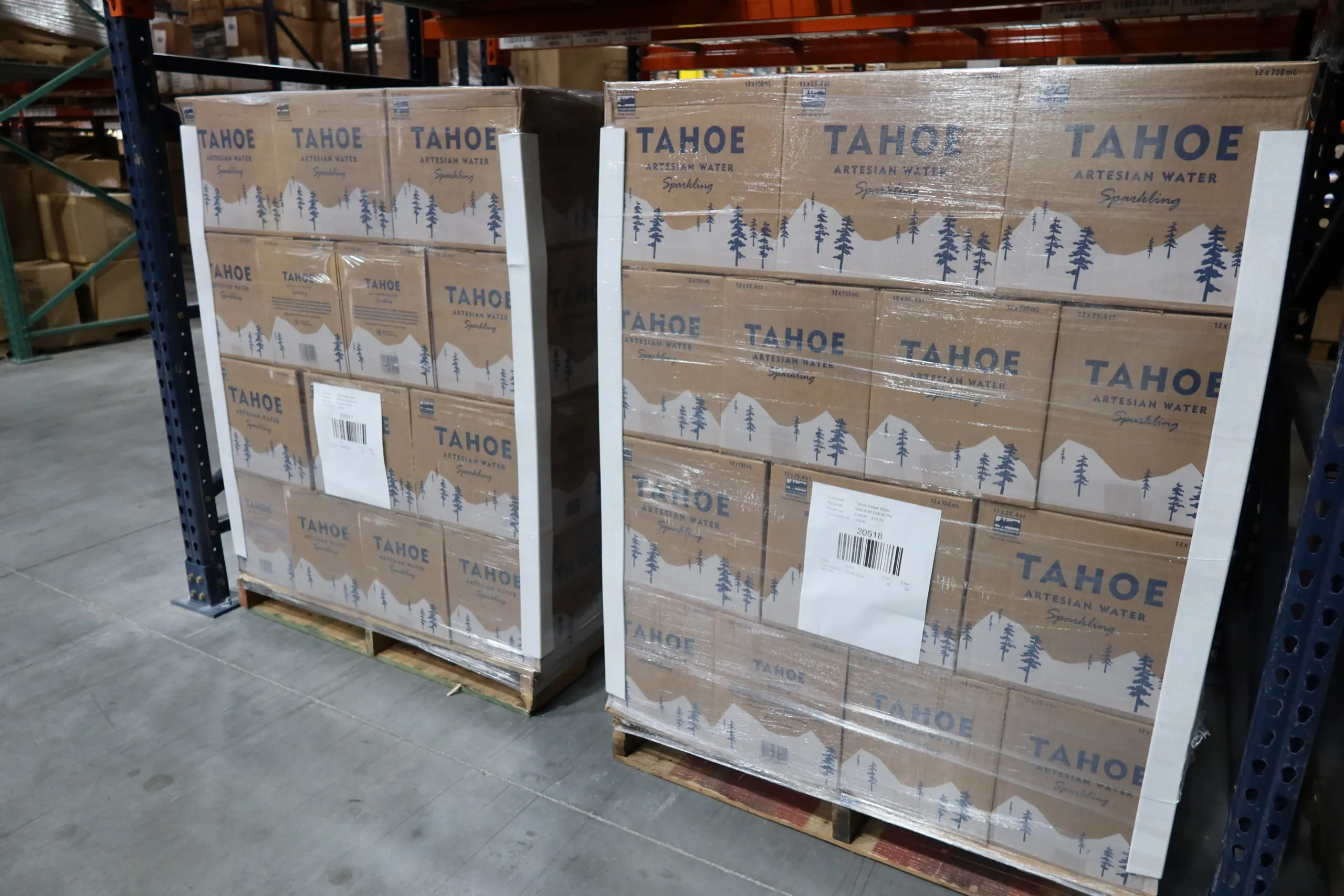
Choosing a third-party logistics provider is often treated as a simple operational decision: find a warehouse, store inventory, ship orders. In practice, that choice directly affects profitability, retailer relationships, and long-term scalability. The wrong partner rarely causes an immediate, obvious failure; instead, small inefficiencies compound quietly until they've become a real constraint on growth.
Why the Wrong 3PL Rarely Fails a Beverage Brand All at Once
Beverage brands face distribution pressures that make the wrong choice more costly than it would be for many other product categories. Products are fragile, heavy, and frequently liquid. SKU counts expand quickly as new flavors, sizes, and seasonal variations get added. Retail and wholesale distribution introduce compliance requirements that have to be met precisely, and DTC customers expect fast, accurate shipping regardless of where they're located.
Many brands select a 3PL early on based on cost or proximity, which can work fine at low volume. As order volume grows and distribution expands nationally, the limitations of that original choice tend to surface all at once: shipping errors increase, inventory discrepancies emerge, retail chargebacks become more frequent, delivery timelines stretch, and leadership starts spending more time resolving logistics problems than driving growth. Most of these costly problems trace back to warning signs that were visible during the original selection process but easy to overlook at the time.
The Red Flags Beverage Brands Miss When Selecting a 3PL
Limited experience with beverage products specifically. A general-purpose warehouse may not have processes built for fragile, liquid items. Without careful handling and protective packing configurations designed for beverages, breakage and leakage tend to increase as order volume grows.
The absence of a real warehouse management system. Real-time inventory tracking is essential for maintaining accuracy across multiple SKUs and channels. Without it, overselling and stock discrepancies can occur, and brands often don't discover how limited or delayed their visibility actually is until a problem has already happened.
Single-location geographic limitations. A single warehouse can struggle to support national distribution efficiently. Shipping costs rise as orders travel longer distances, and delivery timelines become inconsistent depending on where the customer is located. A bi-coastal or multi-location strategy tends to become necessary as a brand scales nationally.
Lack of retail compliance expertise. Retailers require precise labeling, pallet configuration, and routing adherence, and a 3PL unfamiliar with these specific requirements can expose a brand to chargebacks and strained retail relationships that are avoidable with the right partner.
Limited operational transparency. Brands should have access to real-time reporting and clear communication. Without visibility into inventory and fulfillment performance, it's difficult to catch a developing issue before it escalates into a customer- or retailer-facing problem.
Unproven scalability. A 3PL that performs well at low volume may not hold up as order counts increase. Staffing, workflow design, and system infrastructure all need to be capable of supporting growth without a corresponding drop in accuracy or delivery performance.
Why These Red Flags Are Easy to Miss During the Original Selection
Most of these warning signs aren't hidden. They're just easy to underweight when a brand is evaluating a 3PL primarily on cost and basic capability, which is a common approach at an earlier, lower-volume stage. A provider can handle a smaller brand's needs adequately while still lacking the beverage-specific processes, real-time systems, and geographic reach that become necessary once volume and channel complexity increase. The red flag isn't always visible in what a 3PL currently does poorly. It's often visible in what they simply haven't built yet, because they haven't needed to.
Questions Beverage Brands Should Ask During Evaluation
- Will this 3PL actually support national growth, or only the volume and geography we're currently operating at?
- Can they demonstrate specific experience handling fragile and liquid products, not just general fulfillment capability?
- How accurate and real-time is their inventory tracking, specifically? Can they show this, not just describe it?
- Do they have documented experience with retail compliance requirements, or would we be their first beverage retail account?
- Can they manage DTC, wholesale, and retail simultaneously without one channel affecting the others?
- What evidence do they have that their infrastructure actually scales, beyond assurances?
How TCB Global Is Built Around Beverage-Specific Complexity
TCB Global operates fulfillment centers in Orlando, Florida and Las Vegas, Nevada, giving beverage brands a coordinated national fulfillment strategy while maintaining visibility and control over inventory and shipments. Orlando supports Southeastern and East Coast distribution, and Las Vegas supports Western and Central markets. Positioning inventory across both locations reduces shipping distances, improves delivery speed, and helps maintain consistent product availability nationwide.
Inventory is tracked in real time across both facilities, structured handling procedures are built specifically to reduce breakage and leakage, and retail and wholesale shipments are prepared to each partner's compliance requirements (pallet configuration, labeling, and routing) while DTC orders are packed for speed and durability. This integrated approach is designed specifically to avoid the red flags described above rather than address them reactively after a brand has already experienced the problem.
What Changes as a Brand Scales Past Its Original 3PL Choice
A 3PL that was the right fit at a brand's original volume and channel mix doesn't automatically remain the right fit as SKU count, order volume, and retail accounts grow. It's worth periodically re-evaluating the original selection against the red flags above. That's not because the original choice was necessarily wrong, but because the requirements that matter most tend to shift as a brand scales, and a provider that hasn't kept pace with that shift becomes a growth constraint rather than a growth enabler.
Why It's Worth Auditing a Current 3PL Against This List, Not Just a New One
These red flags are usually framed as things to watch for when selecting a new 3PL, but they're just as useful applied to an existing relationship. A brand that's been with the same fulfillment partner for a while can benefit from running through this same list periodically: has beverage-specific handling actually kept pace with SKU growth, does inventory visibility still feel reliable at current volume, has the provider's geographic footprint kept up with where customers and retail accounts are now concentrated. Treating this as a recurring check rather than a one-time selection exercise tends to catch a developing mismatch before it turns into the kind of disruption a rushed 3PL switch is meant to avoid.
FAQs
What is the most commonly overlooked red flag when choosing a beverage 3PL?
Limited experience with beverage products specifically. A general-purpose fulfillment provider may lack the handling and packaging processes needed to prevent breakage and leakage at scale.
Why does a lack of real-time inventory tracking matter so much for beverage brands?
Because beverage brands typically manage multiple SKUs and channels simultaneously, and without real-time visibility, overselling and stock discrepancies tend to surface only after they've already caused a problem.
Does a single-location 3PL create long-term risk for a beverage brand?
Yes, particularly as national distribution grows. A single warehouse means longer average shipping distances, higher costs, and less consistent delivery timelines compared to a multi-location strategy.
How can a brand tell if a 3PL actually has retail compliance experience?
Ask for specifics on how they've handled labeling, pallet configuration, and routing requirements for actual retail accounts, rather than accepting a general assurance that they "handle compliance."
Why might a 3PL that worked well early on become the wrong fit later?
Because the requirements that matter most shift as a brand scales. A provider that was adequate for lower volume and simpler channel needs may not have the systems or capacity to support the brand's next stage of growth.
How does TCB Global avoid these common red flags?
Through beverage-specific handling procedures, real-time inventory tracking across Orlando and Las Vegas, documented retail compliance workflows, and a multi-location strategy built for national distribution.
If you're evaluating a 3PL for your beverage brand, or suspect your current one is showing some of these red flags, contact TCB Global to walk through your specific requirements before committing.
Want to learn more?
Check out how TCB can help you chose the right 3PL for your beverage brand! (click here)
Heading 1
Heading 2
Heading 3
Heading 4
Heading 5
Heading 6
Lorem ipsum dolor sit amet, consectetur adipiscing elit, sed do eiusmod tempor incididunt ut labore et dolore magna aliqua. Ut enim ad minim veniam, quis nostrud exercitation ullamco laboris nisi ut aliquip ex ea commodo consequat. Duis aute irure dolor in reprehenderit in voluptate velit esse cillum dolore eu fugiat nulla pariatur.
Block quote
Ordered list
- Item 1
- Item 2
- Item 3
Unordered list
- Item A
- Item B
- Item C
Bold text
Emphasis
Superscript
Subscript
New Post:
Case Study

How F*ck Cancer Runs a Seven-Festival Tour Without a Logistics Team
F*ck Cancer brings cancer awareness to major music festivals through an activation tent. Their team sets it up and tears it down. Since 2024 we've handled everything behind that: routing, freight, delivery, pickup and storage between shows across seven festivals.
Read More