
Pick, Pack, and Protect: The Step-by-Step Process That Actually Prevents Shipping Damage

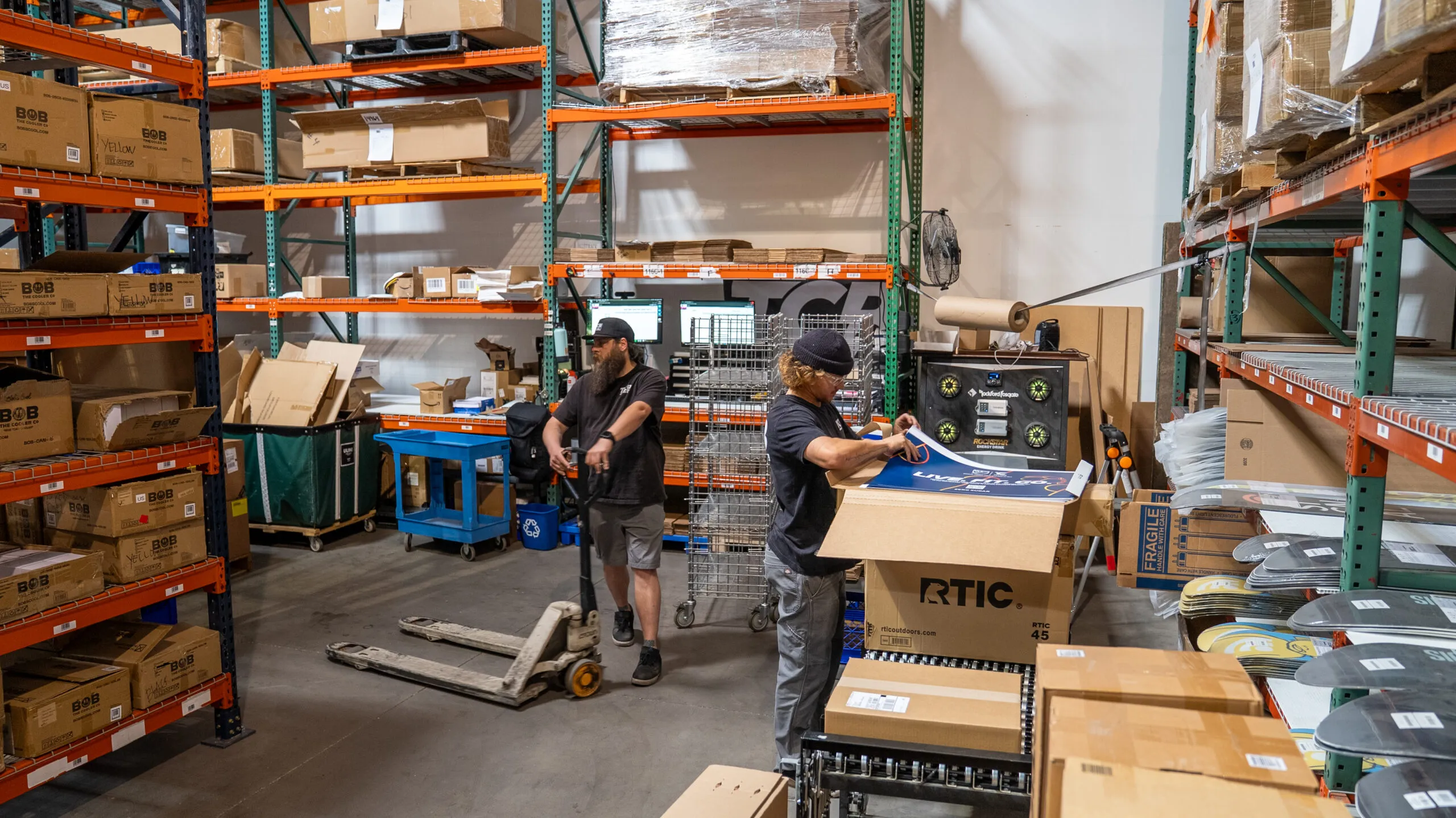
Preventing shipping damage is often talked about as if it comes down to one choice: using a sturdier box, or a better packing material. In practice, damage prevention is the cumulative result of several distinct steps working together: how a product is picked, how it's packed, how it's stabilized for transit, and how it's checked before it ever leaves the facility. A weak link at any single step can undo careful work at every other step, which is why a structured, sequential process matters more than any one packaging decision on its own.
This piece walks through that process step by step. For the cost and margin case behind why this matters, see TCB Global's related piece on how packaging strategy affects beverage brand profitability. This one focuses specifically on how the workflow itself is built.
Step 1: Picking Designed to Minimize Unnecessary Handling
Damage prevention starts before packing even begins. The picking process is designed around organized location mapping that reduces unnecessary movement and limits a product's exposure to potential impact while it's still being retrieved from storage. Every additional handling touch (an extra transfer, an inefficient travel path) is another opportunity for a bottle to be knocked, a can to be dented, or a case to be dropped, so minimizing handling touches is itself a damage-prevention step, not just an efficiency one.
Step 2: Packing Configurations Matched to the Specific Product
Once picked, products move into a packing process that prioritizes stabilization over speed. Packing configurations are selected based on product type, weight, and shipping distance rather than a single default box size and filler material applied to everything. Glass bottles need cushioning and structural support to prevent impact damage specifically. Canned beverages need protection against compression and shifting, which is a different failure mode than impact damage and requires a different packing response. Liquid products need sealing and securing specifically to prevent leakage, which is a concern that doesn't apply to dry goods at all.
Step 3: Preventing Internal Movement, Not Just External Impact
A lot of in-transit damage isn't caused by an external drop or collision. It's caused by a product shifting and impacting itself or the box's interior repeatedly over the course of a long transit. Packing to prevent internal movement (so a product can't shift within the box during handling) addresses this specific failure mode, which a sturdy outer box alone doesn't solve if the product is free to move inside it.
Step 4: Quality Control Before the Shipment Ever Leaves
A pre-ship quality control check verifies both packaging integrity and order accuracy before a shipment leaves the facility. Catching a packing error at this stage is far less costly than discovering it after the product has already been damaged in transit or arrived incorrectly at a customer's door.
Step 5: Additional Stabilization for Retail and Wholesale Shipments
Retail and wholesale shipments carry additional requirements beyond individual package protection. Pallets need to be configured and wrapped specifically to prevent shifting during freight transport, and labeling has to meet each retailer's compliance standards. That's a different set of steps than DTC parcel shipping, applied on top of the same underlying picking and packing discipline described above.
Why Each Distribution Channel Needs a Slightly Different Version of This Process
DTC shipments need to withstand parcel carrier handling and often longer transit distances than a local delivery would involve. Retail shipments need to arrive palletized and compliant with a specific retailer's delivery standards. Wholesale shipments frequently involve larger quantities that need freight-specific stabilization. A single generic process applied to all three tends to under-protect at least one of them, so the pick-pack-protect workflow needs channel-specific steps layered on top of the same core discipline, not a one-size-fits-all approach.
Questions to Ask About Your Current Pick, Pack, and Protection Process
- Is picking organized to minimize unnecessary handling, or does the current layout require more transfers and travel than necessary?
- Are packing configurations actually matched to specific product types, or is a single default box and filler used across a varied catalog?
- Does the packing process specifically address internal product movement, not just external impact protection?
- Is there a quality control check before shipment, or is the first real inspection point after a customer or retailer has already received it?
- Are retail and wholesale shipments held to their own stabilization and compliance standards, separate from DTC parcel packing?
How TCB Global Applies This Process
TCB Global applies this full sequence (organized picking to minimize handling, product-specific packing configurations, internal stabilization against shifting, pre-ship quality control, and channel-specific procedures for retail and wholesale pallet shipments) across its Orlando, Florida and Las Vegas/Henderson, Nevada facilities. Fewer handling touchpoints, supported by the dual-location structure reducing overall transit distance, compound with the process discipline described above to reduce damage risk at multiple points rather than relying on any single safeguard.
What Changes as Order Volume and Product Variety Grow
As a beverage brand adds SKUs and scales order volume, the pick-pack-protect process has to hold up across a wider range of product types and a much larger number of repetitions. A packing configuration that worked adequately for a smaller, more uniform catalog can start to show gaps once new package formats, sizes, or fragility profiles are introduced. It's worth revisiting packing configurations specifically when adding new SKUs, rather than assuming an existing configuration will adequately protect a product it wasn't originally designed around.
Why Damage Patterns Are Worth Reviewing by Step, Not Just by Product
When damage rates rise, it's tempting to look first at the finished packaging and assume the fix is a better box or more cushioning. Often the actual failure point is earlier in the process: a picking path that involves more handling than necessary, or a quality control step that's being skipped under time pressure during high-volume periods. Reviewing damage incidents against each specific step in the process (picking, packing, stabilization, QC, channel-specific handling) rather than only against the finished product tends to reveal which stage is actually contributing the most risk, which is a more useful diagnostic than treating every damage incident as a packaging problem by default.
FAQs
What's the difference between packing for impact protection and packing to prevent internal movement?
Impact protection addresses damage from external drops or collisions; preventing internal movement addresses damage from a product shifting and repeatedly impacting the inside of its own box during a long transit. Both need to be addressed, since a sturdy box alone doesn't stop internal shifting.
Why does picking process matter for damage prevention, not just packing?
Because every unnecessary handling touch during picking is a chance for impact damage before the product ever reaches the packing stage. Minimizing handling touches is itself a damage-prevention step.
Do DTC, retail, and wholesale shipments need different packing approaches?
Yes. DTC needs parcel-carrier durability, retail needs palletization and compliance with a specific retailer's standards, and wholesale needs freight-specific stabilization for larger quantities.
When should quality control checks happen in the fulfillment process?
Before a shipment leaves the facility. Catching a packaging or accuracy issue at this stage is far less costly than discovering it after the product has already been damaged or shipped incorrectly.
How does TCB Global structure its pick, pack, and protection process?
Through organized picking to minimize handling, product-specific packing configurations, internal stabilization against shifting, pre-ship quality control, and channel-specific procedures for retail and wholesale shipments across its Orlando and Las Vegas facilities.
If shipping damage is showing up more often than it should, contact TCB Global to walk through where in the pick-pack-protect process the gap is likely originating.
Want to learn more?
Heading 1
Heading 2
Heading 3
Heading 4
Heading 5
Heading 6
Lorem ipsum dolor sit amet, consectetur adipiscing elit, sed do eiusmod tempor incididunt ut labore et dolore magna aliqua. Ut enim ad minim veniam, quis nostrud exercitation ullamco laboris nisi ut aliquip ex ea commodo consequat. Duis aute irure dolor in reprehenderit in voluptate velit esse cillum dolore eu fugiat nulla pariatur.
Block quote
Ordered list
- Item 1
- Item 2
- Item 3
Unordered list
- Item A
- Item B
- Item C
Bold text
Emphasis
Superscript
Subscript
New Post:
Case Study

How F*ck Cancer Runs a Seven-Festival Tour Without a Logistics Team
F*ck Cancer brings cancer awareness to major music festivals through an activation tent. Their team sets it up and tears it down. Since 2024 we've handled everything behind that: routing, freight, delivery, pickup and storage between shows across seven festivals.
Read More