
How High-Growth Brands Maintain Control During Peak Shipping Weeks

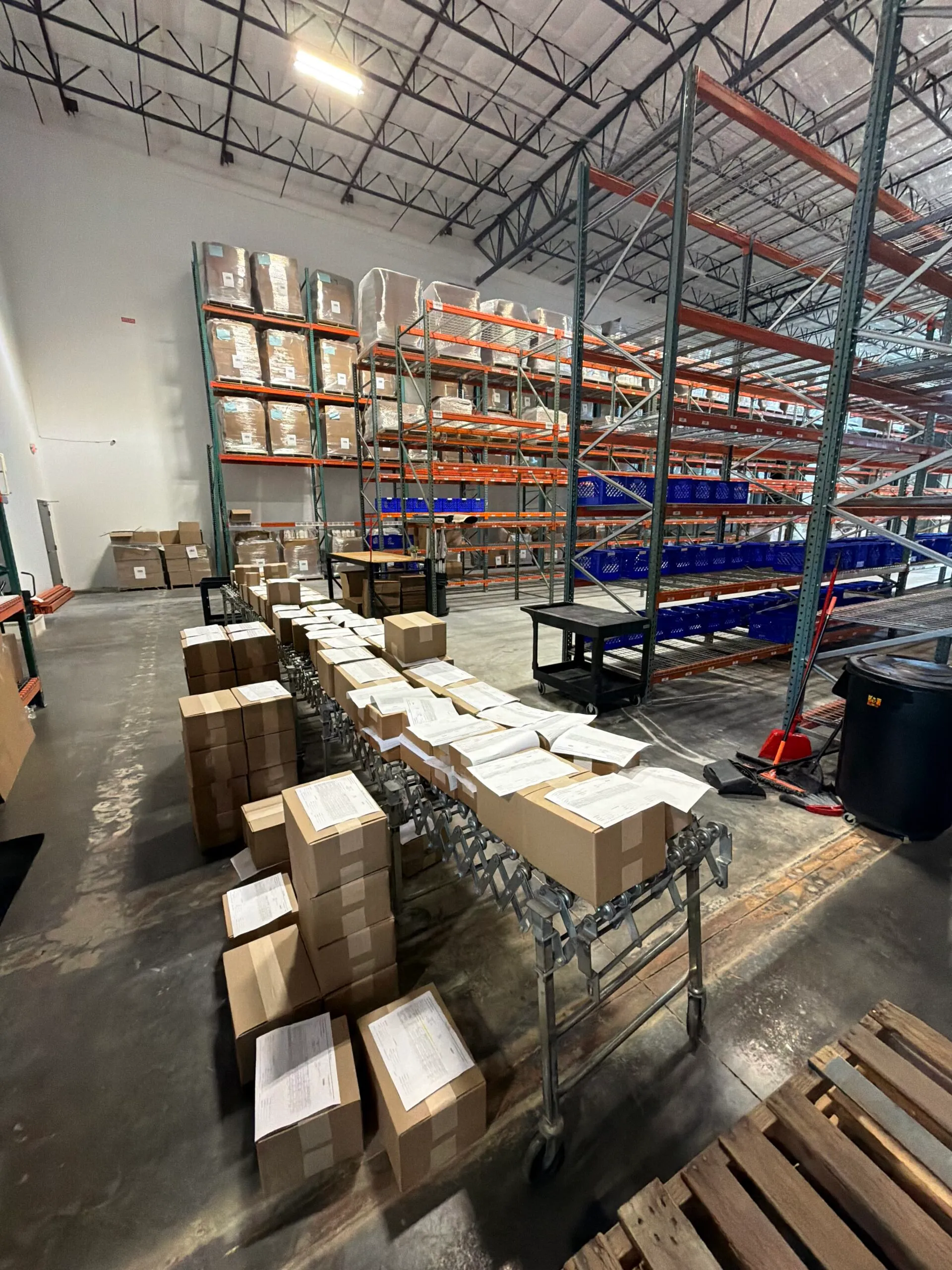
Peak shipping weeks are both the biggest opportunity and the biggest risk on a high-growth brand's calendar. Seasonal demand spikes, promotional campaigns, and retail replenishment surges can generate a disproportionate share of annual revenue in a short window, but that same demand surge is exactly what exposes any weakness in a fulfillment operation that wasn't built to absorb it.
Why Peak Shipping Weeks Expose Operational Weaknesses So Quickly
The strain shows up fast: order volume can double or triple within days, inventory moves faster than usual, customer service inquiries increase, and retail replenishment timelines tighten all at once. At smaller scale, brands often get through peak periods by working longer hours or bringing in temporary staff, but that approach becomes harder to sustain as volume grows. Manual processes strain, inventory accuracy slips, and shipping delays start to compound, all while customer expectations for fast, reliable delivery stay exactly where they were the rest of the year.
What a National Fulfillment Network Actually Does During Peak
TCB Global operates fulfillment centers in Orlando, Florida and Las Vegas, Nevada, and that dual-location structure matters specifically during peak periods: it lets a brand distribute order volume across two facilities rather than funneling an entire national surge through a single warehouse. Orlando supports Southeastern and East Coast distribution while Las Vegas covers Western and Central markets, which reduces the odds of one facility becoming a bottleneck during the highest-volume weeks of the year.
Structured receiving, picking, packing, and shipping workflows are what actually keep orders moving during a volume spike. Real-time inventory tracking across both facilities gives visibility into stock levels and movement precisely when that visibility matters most, since peak season is when inventory discrepancies are most likely to surface and most costly to miss.
What Actually Breaks During Peak Season
- Inventory miscounts, often caused by receiving processes getting rushed as product moves through the facility faster than usual.
- Overselling, when inventory systems aren't properly synchronized across every sales channel in real time.
- Errors from temporary labor brought on quickly without adequate training, which shows up in picking and packing accuracy.
- Shipping delays from warehouse congestion or from carrier networks themselves being under peak-season strain.
- Customer service teams becoming overwhelmed with order-status inquiries once fulfillment timelines start slipping.
- Retail partner penalties when replenishment shipments arrive late during exactly the period retailers are counting on consistent supply.
Questions Brands Should Be Asking Before Peak Season Arrives
- How do we prevent delays specifically during peak weeks, rather than reacting once they've already started?
- Will our current team and systems actually handle a volume spike, or are we assuming they will based on how things ran last year?
- How do we avoid overselling across channels during promotions, when inventory is moving faster than usual?
- Can our inventory systems maintain accuracy under significantly higher transaction volume?
- What's our specific plan if shipping volume doubles with little advance warning?
- How do we protect customer experience during a demand surge rather than just absorbing the disruption?
How TCB Global Approaches Peak Season Operationally
TCB Global's fulfillment workflows are structured to absorb seasonal and promotional demand fluctuations without disrupting service quality. Inventory is tracked through real-time systems that give visibility into stock levels and order flow specifically so that decisions during peak periods are based on current data, not assumptions carried over from a slower month.
The Orlando and Las Vegas facilities support this by distributing workload geographically, routing orders through whichever location is more efficient for a given surge rather than concentrating all volume in one place, with structured staffing and operational planning built around the reality that peak periods need more deliberate preparation than a normal operating week.
Why Peak Demand Rarely Hits Just One Sales Channel
Peak shipping weeks tend to hit every channel simultaneously rather than one at a time. DTC orders surge during promotional campaigns and holidays, retail replenishment increases to support in-store demand, and wholesale or distribution partners frequently need additional inventory during the exact same window. Managing all three internally at once means inventory has to be allocated accurately across channels, orders have to be prioritized sensibly, and shipping schedules have to hold. Without centralized coordination, these variables tend to create conflict rather than simply adding up.
TCB Global centralizes inventory and order management across DTC, retail, and wholesale channels within one system during peak periods, updating stock levels in real time so allocation stays accurate across channels rather than each channel operating off its own separate, potentially conflicting view of available inventory.
What Changes as Peak Season Volume Grows Year Over Year
A peak-season plan that worked at last year's volume doesn't automatically scale to this year's, particularly for a fast-growing brand where year-over-year peak demand can increase significantly faster than baseline order volume. It's worth revisiting staffing plans, safety stock levels, and channel-allocation logic ahead of each peak season specifically, rather than assuming last year's playbook still fits, and building in a post-peak review to capture what actually broke (or nearly broke) so the following year's plan improves rather than just repeats.
Why a Post-Peak Review Matters as Much as the Pre-Peak Plan
It's tempting to treat the end of peak season as the finish line, but the period immediately after is one of the most useful times to actually improve the operation. Order data from the surge (where delays happened, which SKUs had the tightest margins for error, which channel allocation logic held up and which didn't) is freshest and most specific right after the fact, not months later when planning for the next cycle begins. Brands that build a structured post-peak review into their process, rather than moving straight on to the next priority, tend to walk into the following year's peak with a plan informed by actual data rather than general impressions of how things went.
FAQs
How far in advance should a brand start preparing for peak season?
Well before the surge itself. Staffing plans, inventory positioning, and channel-allocation logic all need to be in place ahead of time, since peak season is the worst possible moment to be building these processes reactively.
What typically causes overselling during peak periods?
Inventory systems that aren't properly synchronized in real time across sales channels, so more than one channel ends up selling against the same physical stock.
Does a multi-location fulfillment network actually help during peak season?
Yes. Distributing order volume across multiple facilities reduces the risk of any single warehouse becoming a bottleneck during the highest-volume weeks of the year.
What's the most common cause of peak-season shipping delays?
Warehouse congestion from a volume spike, or carrier networks themselves operating under peak-season strain. Both are worth planning around rather than treating as unavoidable.
How does TCB Global support brands during peak shipping weeks?
Through structured, real-time inventory tracking and workflows across its Orlando and Las Vegas facilities, distributing order volume geographically rather than concentrating it in a single location.
Should peak-season planning change year to year?
Yes. Year-over-year demand growth, especially for fast-growing brands, means a plan built for last year's volume may not fit this year's, so staffing and inventory plans should be revisited each cycle rather than reused as-is.
If you're heading into a peak shipping period without a specific plan for staffing, inventory positioning, and multi-channel allocation, contact TCB Global to review your peak-season readiness before volume hits.
Want to learn more?
Check out how TCB can help you maintain control during peak shipping weeks! (click here)
Heading 1
Heading 2
Heading 3
Heading 4
Heading 5
Heading 6
Lorem ipsum dolor sit amet, consectetur adipiscing elit, sed do eiusmod tempor incididunt ut labore et dolore magna aliqua. Ut enim ad minim veniam, quis nostrud exercitation ullamco laboris nisi ut aliquip ex ea commodo consequat. Duis aute irure dolor in reprehenderit in voluptate velit esse cillum dolore eu fugiat nulla pariatur.
Block quote
Ordered list
- Item 1
- Item 2
- Item 3
Unordered list
- Item A
- Item B
- Item C
Bold text
Emphasis
Superscript
Subscript
New Post:
Case Study

How F*ck Cancer Runs a Seven-Festival Tour Without a Logistics Team
F*ck Cancer brings cancer awareness to major music festivals through an activation tent. Their team sets it up and tears it down. Since 2024 we've handled everything behind that: routing, freight, delivery, pickup and storage between shows across seven festivals.
Read More