
Orlando vs. Las Vegas Fulfillment: Why the Real Answer Is Usually Both

As brands scale nationally, one of the most consequential and most overlooked decisions isn't which 3PL to use or which carrier to negotiate with. It's where the product actually sits. Warehouse location directly affects shipping zones and cost, delivery speed, customer satisfaction, retail compliance, and overall operational efficiency, which means it functions as a strategic lever, not a background logistics detail.
The common framing ("should we use Orlando or Las Vegas") usually isn't the right question. The more useful one is understanding what each location does best and how to use both together, since a single-location strategy runs into real limits once a brand's customer base spans the country.
Orlando: The East Coast and Southeast Advantage
Orlando is one of the more strategic fulfillment hubs in the Southeast, with access to Florida's dense population, major Southeast markets (Atlanta, Miami, Tampa), established East Coast distribution lanes, and port and international shipping access relevant to Caribbean-adjacent trade.
For brands shipping into the Southeast and East Coast, Orlando generally supports faster ground delivery, lower shipping costs within the region, and strong access to Southeast retail accounts. It tends to be especially valuable for beverage brands distributing within Florida specifically, ecommerce brands with concentrated East Coast demand, and retail shipments targeting Southeast markets.
Relying on Orlando alone creates a predictable gap, though: shipping to the West Coast from Florida means higher carrier zones, longer transit times, and increased cost. That's the same distance penalty that affects any single-location operation serving a national customer base from one coast.
Las Vegas: The West Coast and Mountain-Region Advantage
Las Vegas functions as one of the more efficient logistics hubs for Western distribution, with access to California markets, Mountain states, Southwest distribution corridors, and major freight routes without the congestion typical of coastal California logistics markets.
For brands targeting West Coast and broader national growth, Las Vegas generally supports faster delivery to Western states, reduced shipping cost compared to shipping the same distance from an East Coast origin, and more consistent transit times. It tends to be especially valuable for beverage brands expanding West, Amazon FBM and DTC fulfillment reaching Western customers, and national ecommerce operations balancing coverage across both coasts.
Like Orlando, Las Vegas isn't a complete national solution on its own. It solves the West Coast side of the equation but doesn't address East Coast distance and cost the way Orlando does.
Why Single-Location Fulfillment Runs Into a Hard Ceiling
Many brands start by scaling from a single warehouse, and it works until national order volume grows enough that the limitations become unavoidable: rising shipping costs, slower delivery times to the coast farther from the warehouse, increased delivery variability, and added strain during peak demand. This isn't a fixable inefficiency within a single-location model. It's a structural limit, since one location cannot serve the entire country with equal efficiency in both directions.
What a Modern Two-Location Strategy Actually Looks Like
Rather than choosing one location, the more effective approach for a brand with national demand is using Orlando for East Coast and Southeast coverage and Las Vegas for West Coast and Mountain coverage simultaneously. This reduces shipping zones on both sides of the country, improves delivery times regionally rather than only in one direction, balances inventory according to actual regional demand, and lets a brand scale without the operational friction of trying to force every order through a single point.
How to Decide the Right Split Between the Two Locations
Inventory placement between two locations isn't guesswork. It should be driven by actual data: where customers are concentrated geographically, order volume broken down by region, a real shipping-cost comparison across scenarios, and SKU-level movement patterns that might justify positioning certain products differently than others. Building a placement strategy around this data, rather than an even 50/50 split by default, is what actually keeps inventory positioned to match real demand rather than an assumption about it.
Questions to Ask When Deciding How to Split Inventory
- What percentage of our current order volume is East Coast versus West Coast, and has that split shifted recently?
- Are specific SKUs concentrated in demand by region in a way that justifies uneven allocation between locations?
- What would our actual shipping cost and transit-time difference look like under a few different allocation scenarios?
- How do we plan to rebalance the split as regional demand shifts over time, rather than setting it once and leaving it fixed?
How TCB Global Supports This Decision
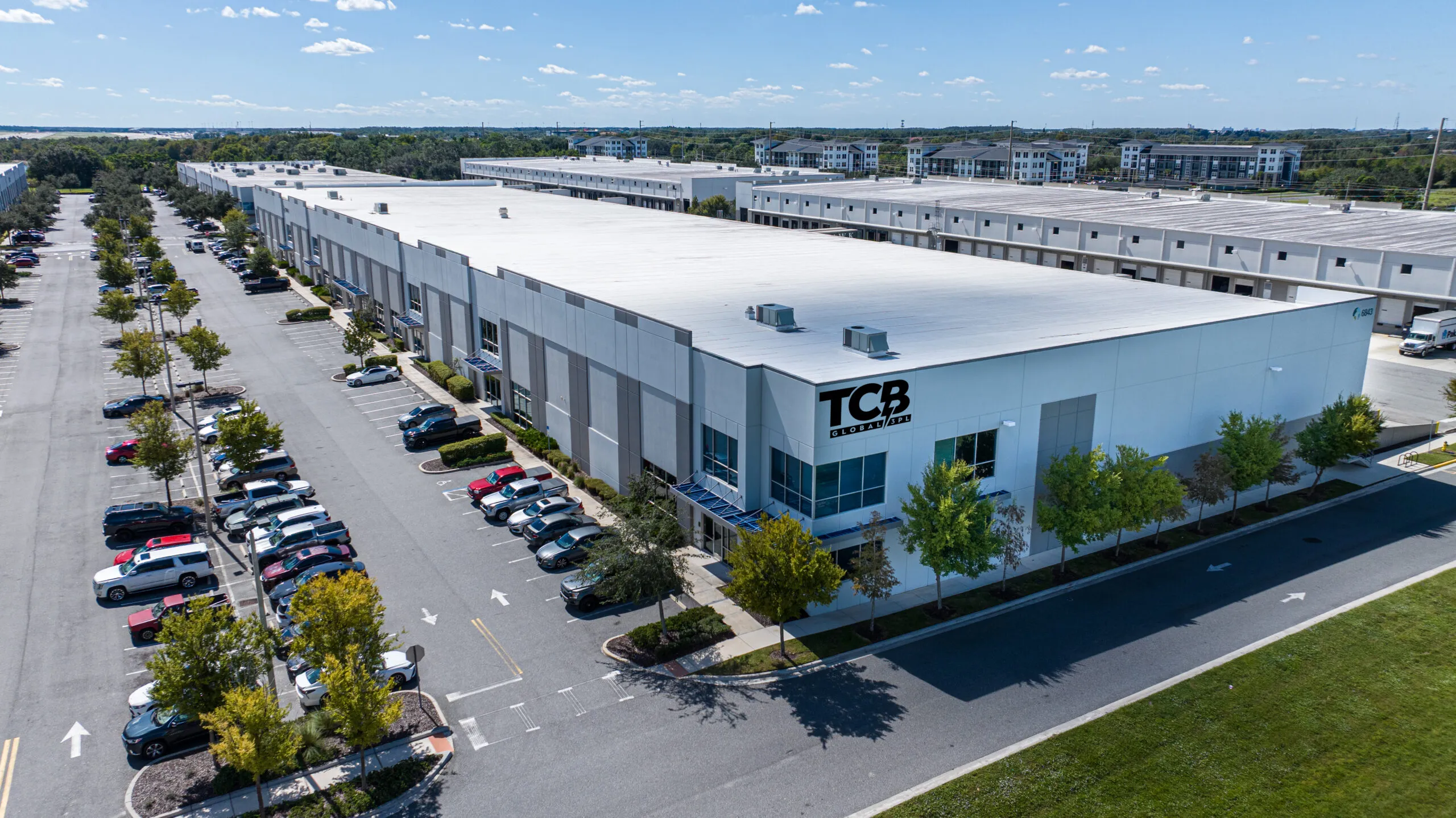
TCB Global operates fulfillment centers in both Orlando, Florida and Las Vegas, Nevada, giving brands the infrastructure to implement a distributed inventory strategy rather than defaulting to a single location out of convenience. Placement decisions can be informed by customer location data, regional order volume, shipping-cost analysis, and SKU movement patterns, so that inventory is positioned according to where demand actually is rather than an assumption carried over from an earlier, smaller stage of the business.
What Changes as a Brand's National Footprint Grows
The right Orlando/Las Vegas split isn't a one-time decision. As a brand adds new regions, retail accounts, or marketing pushes that shift demand toward one coast, the original allocation may no longer fit. It's worth revisiting the split periodically using the same data points that informed the original decision, rather than assuming a ratio set early on will continue to match demand indefinitely as the business grows and its geography shifts.
Why This Decision Also Affects More Than Shipping Cost
The Orlando/Las Vegas allocation question is often framed purely around freight cost, but it also affects retail compliance and peak-season resilience. A retail account concentrated in the West Coast served entirely from Orlando is more exposed to missed delivery windows during any East Coast disruption, and a peak-season demand spike in one region hits harder if that region's demand is being served entirely from the opposite coast. Treating the allocation decision as a single freight-cost spreadsheet exercise, rather than factoring in compliance risk and resilience, tends to undercount the actual value of a well-balanced two-location strategy.
FAQs
Should a brand choose Orlando or Las Vegas for fulfillment?
It depends on customer geography, but most brands with national demand benefit from using both locations strategically rather than choosing one exclusively.
Why does warehouse location matter this much for shipping cost?
Because carriers price shipments by zone based on distance. A warehouse far from a customer means a higher zone, longer transit time, and higher cost regardless of carrier rate.
What does Orlando specifically offer that Las Vegas doesn't?
Faster, lower-cost access to Southeast and East Coast markets, plus proximity to Port Canaveral and Caribbean-adjacent shipping routes.
What does Las Vegas specifically offer that Orlando doesn't?
Faster, lower-cost access to California, Mountain states, and Southwest markets, without the congestion or cost structure of a coastal California logistics hub.
How should a brand decide the right inventory split between two locations?
Based on actual data (regional order volume, customer location concentration, shipping-cost comparisons, and SKU-level movement patterns) rather than an even default split.
How does TCB Global help brands decide between Orlando and Las Vegas?
By analyzing customer location data, regional order volume, and shipping costs to build a placement strategy using both locations rather than defaulting to one.
If you're still fulfilling nationally from a single location, contact TCB Global to review your current shipping-zone data and build an Orlando/Las Vegas placement strategy around your actual demand.
Want to learn more?
Check out how TCB can help you split your fulfillment nationally! (click here)
Heading 1
Heading 2
Heading 3
Heading 4
Heading 5
Heading 6
Lorem ipsum dolor sit amet, consectetur adipiscing elit, sed do eiusmod tempor incididunt ut labore et dolore magna aliqua. Ut enim ad minim veniam, quis nostrud exercitation ullamco laboris nisi ut aliquip ex ea commodo consequat. Duis aute irure dolor in reprehenderit in voluptate velit esse cillum dolore eu fugiat nulla pariatur.
Block quote
Ordered list
- Item 1
- Item 2
- Item 3
Unordered list
- Item A
- Item B
- Item C
Bold text
Emphasis
Superscript
Subscript
New Post:
Case Study

How F*ck Cancer Runs a Seven-Festival Tour Without a Logistics Team
F*ck Cancer brings cancer awareness to major music festivals through an activation tent. Their team sets it up and tears it down. Since 2024 we've handled everything behind that: routing, freight, delivery, pickup and storage between shows across seven festivals.
Read More