
Kombucha Distribution at Scale: Protecting Shelf Life, Flavor, and Retail Relationships

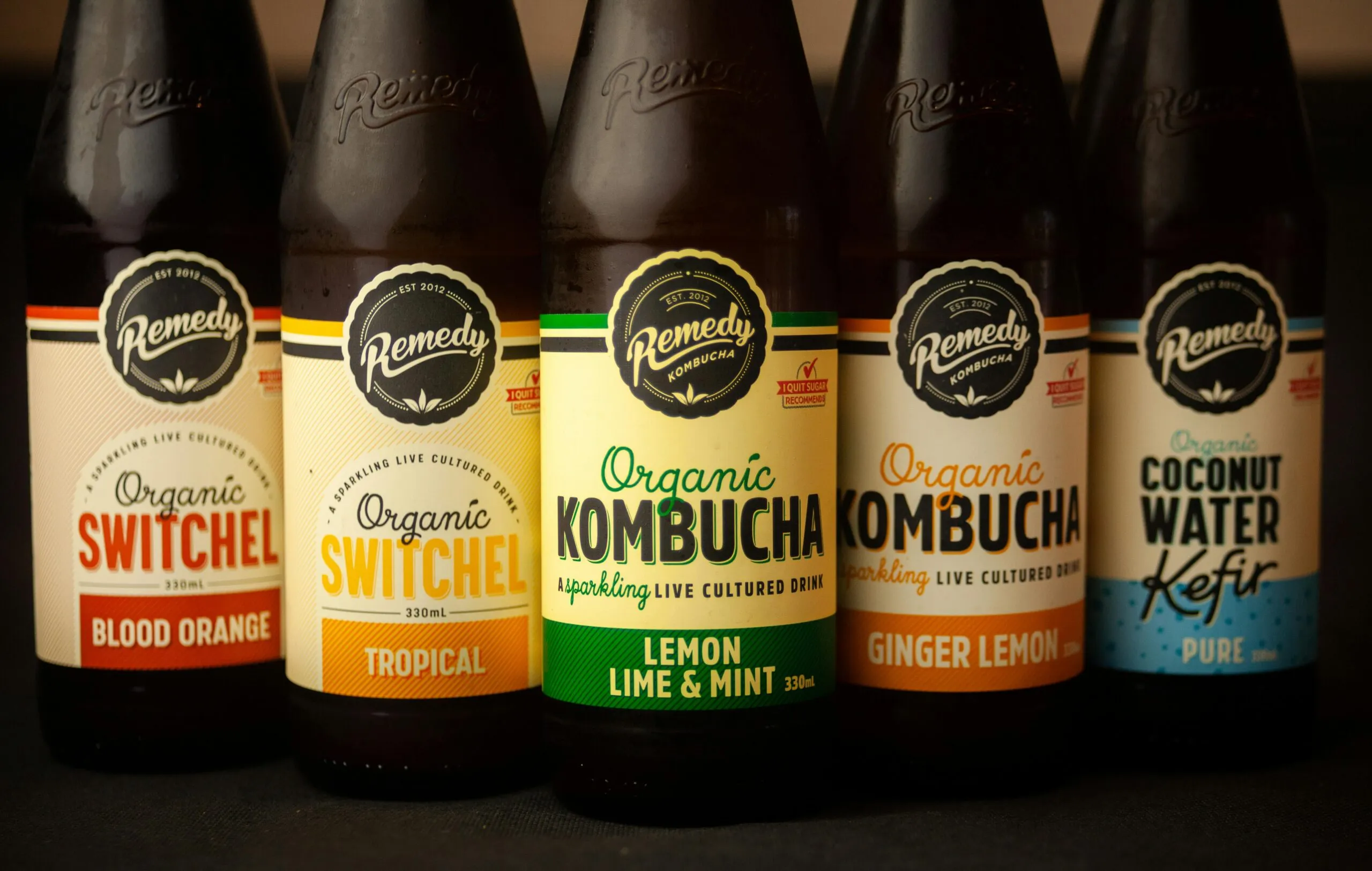
Kombucha has moved from a niche health-store product to a mainstream beverage category in a short span of years, with national grocery chains, specialty retailers, and DTC subscription models all embracing the growing demand for functional beverages. That growth creates real opportunity, but it also introduces distribution challenges that don't apply to shelf-stable beverages in the same way.
Why Kombucha Distribution Is More Complex Than Standard Beverage Logistics
Kombucha is, in a meaningful sense, a living product. It's sensitive to temperature, handling, and storage duration in ways a shelf-stable soda or juice isn't. Shelf life is more limited than traditional beverages, and packaging often involves glass bottles or specialty cans that require careful handling. As distribution expands beyond a local or regional footprint, maintaining product integrity becomes progressively harder to manage without a deliberate strategy behind it.
At small scale, many kombucha producers manage distribution locally, moving product quickly from production to nearby retailers or customers. That model becomes difficult to sustain once demand goes national: shipping distances increase, time spent in storage extends, retail compliance requirements get stricter, and inventory has to be staged strategically to avoid spoilage while maintaining consistent availability.
What Makes Kombucha Logistics Different From Other Beverage Categories
Kombucha needs to move through the supply chain efficiently to maintain flavor and quality. Extended storage or shipping delays can meaningfully affect product performance and customer experience in a way that shelf-stable products are more forgiving of.
Speed of Movement Matters More Than for Shelf-Stable Beverages
Because kombucha continues to change chemically after bottling (ongoing fermentation, carbonation shifts), minimizing the time it spends sitting in storage or in transit is one of the more effective ways to protect flavor consistency. That's a different consideration than for a shelf-stable product, where storage duration has a much smaller effect on the product itself.
Temperature Exposure Is a Real Consideration, Managed Through Speed Rather Than Climate Control
Kombucha benefits from minimized exposure to temperature extremes, but that doesn't necessarily require dedicated climate-controlled (refrigerated) storage. It's a question worth asking any fulfillment partner directly, since the answer changes what mitigation actually looks like. Where storage is ambient rather than climate-controlled, the more relevant levers are how quickly inventory turns over (less time in storage means less cumulative exposure) and how efficiently orders move from storage to shipment, rather than temperature-regulated warehouse space.
Packaging Fragility Adds Another Layer
Many kombucha brands package in glass, which requires careful handling and protective packing configurations distinct from what a canned or plastic-bottled beverage needs. Improper handling leads directly to breakage and product loss, and structured pick-and-pack procedures built around glass specifically, not a generic beverage packing process, are what actually reduce this risk.
Expiration and Rotation Management Is Non-Negotiable
Inventory needs to be rotated and monitored actively to prevent spoilage, using FEFO (First Expired, First Out) principles rather than simple FIFO, since kombucha's shelf-life clock is a more immediate constraint than for many other beverage categories. Real-time tracking and clear stock-level visibility are what make this manageable at scale rather than dependent on manual staff judgment.
Questions to Ask a Fulfillment Partner About Kombucha Specifically
- How does storage and handling account for kombucha's ongoing chemical activity after bottling, as opposed to treating it like a shelf-stable beverage?
- Is storage climate-controlled, or ambient with process-based mitigation? What does that mean practically for shelf life and flavor consistency?
- What specific handling procedures exist for glass packaging, distinct from cans or plastic bottles?
- How is FEFO rotation enforced systematically, rather than relying on staff to track expiration dates manually?
- How quickly does inventory typically move from receiving through to shipment, given how much that transit time affects a living product?
How TCB Global Supports Kombucha and Functional Beverage Distribution
TCB Global operates fulfillment centers in Orlando, Florida and Las Vegas, Nevada, and this dual-location structure is particularly relevant for kombucha. Shorter shipping distances from a well-positioned facility help preserve product quality by reducing the time inventory spends in transit, and retail or DTC orders can ship from whichever location is closer to the customer.
Both facilities operate under ambient conditions rather than climate-controlled storage, so fast turnover and short transit times are the primary protections for shelf life and flavor. TCB Global handles fragile glass packaging with defined procedures designed to reduce breakage, applies FEFO-based inventory rotation to manage shelf life, and provides real-time inventory tracking to support accurate forecasting and reduce the risk of spoilage. Retail shipments are prepared to each partner's labeling, pallet configuration, and routing requirements to protect retail relationships and reduce chargeback exposure.
Supporting Multi-Channel Kombucha Distribution
Most kombucha brands operate across retail, DTC subscription, and wholesale simultaneously, each placing different demands on fulfillment. Without centralized coordination, these channels can compete for the same inventory: a retail order depleting stock needed for DTC shipments, or a promotion generating demand that outpaces available supply. Centralizing inventory management with real-time stock visibility across channels is what prevents this conflict, allocating accurately across retail, DTC, and wholesale rather than treating each channel's demand in isolation.
What Changes as a Kombucha Brand Scales Nationally
As a kombucha brand adds retail accounts and expands into new regions, the margin for error on shelf-life management shrinks rather than grows. More inventory in motion at once means more opportunities for a rotation or timing gap to result in spoilage or an expired product reaching a shelf. It's worth reassessing forecasting accuracy, FEFO enforcement, and regional inventory positioning specifically as national volume increases, rather than assuming a process that worked for regional distribution will scale without adjustment.
Why Retail Accounts Add a Layer of Risk Beyond DTC
A DTC order that arrives a day or two later than ideal is a minor inconvenience; a retail shipment that arrives with reduced shelf life remaining can trigger a rejection or a chargeback, since retailers typically require a minimum amount of remaining shelf life on arrival for perishable and near-perishable products. This makes forecasting accuracy and transit-time consistency more consequential for kombucha's retail channel specifically than for its DTC channel, and worth evaluating separately rather than assuming the same fulfillment approach serves both equally well.
FAQs
Why is kombucha harder to distribute nationally than shelf-stable beverages?
Because it continues changing chemically after bottling, has a more limited shelf life, and is often packaged in glass, all of which make transit time, handling, and rotation more consequential than for shelf-stable products.
Does kombucha require climate-controlled storage?
It benefits from minimized temperature exposure, but that can be managed through fast inventory turnover and reduced transit time even without dedicated climate-controlled storage. It's worth confirming directly with any fulfillment partner what their specific storage conditions are.
What is FEFO, and why does it matter for kombucha specifically?
First Expired, First Out: an inventory rotation method that ships the soonest-to-expire product first, which matters more for kombucha than for longer-shelf-life beverages given how much sooner it can spoil.
How should glass-packaged kombucha be handled differently during fulfillment?
With protective packing configurations and handling procedures specific to glass, since improper handling leads directly to breakage that a generic beverage packing process wouldn't necessarily prevent.
How does TCB Global support kombucha brands distributing nationally?
Through dual-location fulfillment in Orlando and Las Vegas to reduce transit time, glass-specific handling procedures, FEFO inventory rotation, and real-time tracking across retail, DTC, and wholesale channels.
If shelf life or breakage is limiting how far you can distribute your kombucha, contact TCB Global to review your current handling, rotation, and transit-time strategy.
Want to learn more?
Heading 1
Heading 2
Heading 3
Heading 4
Heading 5
Heading 6
Lorem ipsum dolor sit amet, consectetur adipiscing elit, sed do eiusmod tempor incididunt ut labore et dolore magna aliqua. Ut enim ad minim veniam, quis nostrud exercitation ullamco laboris nisi ut aliquip ex ea commodo consequat. Duis aute irure dolor in reprehenderit in voluptate velit esse cillum dolore eu fugiat nulla pariatur.
Block quote
Ordered list
- Item 1
- Item 2
- Item 3
Unordered list
- Item A
- Item B
- Item C
Bold text
Emphasis
Superscript
Subscript
New Post:
Case Study

How F*ck Cancer Runs a Seven-Festival Tour Without a Logistics Team
F*ck Cancer brings cancer awareness to major music festivals through an activation tent. Their team sets it up and tears it down. Since 2024 we've handled everything behind that: routing, freight, delivery, pickup and storage between shows across seven festivals.
Read More