
Retail Chargebacks in Beverage Logistics: What Causes Them and How Fulfillment Design Prevents Them

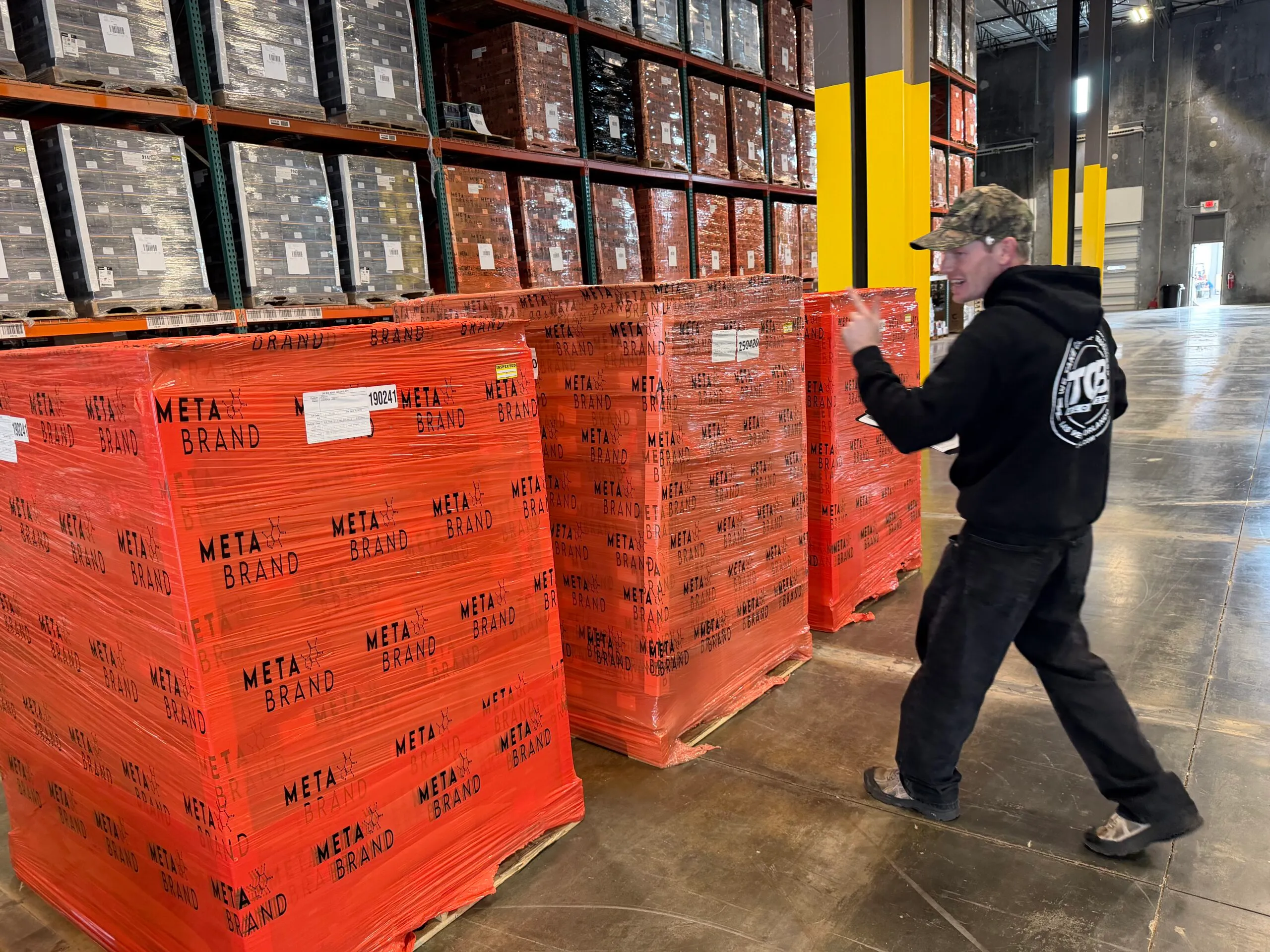
Landing a retail account is a milestone for a beverage brand. It brings placement, volume, and visibility that direct-to-consumer channels can't match on their own. But retail also introduces a cost that's easy to underestimate until it shows up on a deduction statement: chargebacks. They tend to start small and grow as volume increases, and in almost every case the root cause isn't the retailer's policies. It's the fulfillment system behind the shipments.
What Makes Beverage Logistics Especially Prone to Chargebacks
Beverage products are heavier, carry more fragile packaging, and require more specific pallet configurations than many other consumer goods categories, and retailers apply chargebacks automatically when labeling, pallet build, delivery timing, or documentation doesn't match their requirements exactly.
The Specific Fulfillment Failures That Trigger Chargebacks
Incorrect labeling: missing, incorrect, or misplaced labels that don't meet a retailer's exact specification.
Improper pallet configuration: wrong stacking pattern, incorrect case counts, or inadequate wrapping that creates handling problems on the retailer's end.
Missed delivery windows: arriving too early or too late relative to the retailer's scheduled receiving window, regardless of product condition.
ASN (Advance Ship Notice) and documentation mismatches: discrepancies between what was shipped and what was documented.
Damage in transit: packaging or handling issues that leave product damaged on arrival, a cost retailers generally pass back to the shipper rather than absorb.
Why These Issues Compound as Order Volume Grows
At low shipment volume, labeling and documentation errors are usually caught and corrected manually before they become a pattern. As volume increases, the number of shipments, SKUs, and retail destinations multiplies the opportunities for a mismatch, and chargebacks that were once occasional become a recurring cost. Brands built for direct-to-consumer fulfillment often feel this shift hardest, because DTC operations are typically optimized for flexibility rather than the exacting, retailer-specific compliance that wholesale and retail distribution demand.
How TCB Global Structures Fulfillment to Reduce Chargeback Exposure
TCB Global builds retail-bound beverage fulfillment around consistent, verifiable processes rather than manual checks.
- Standardized labeling verified against retailer specifications before shipments leave the warehouse.
- Pallet builds configured and checked against each retailer's requirements to reduce handling-related deductions.
- Delivery scheduling aligned to retailer receiving windows.
- Documentation and ASN accuracy maintained against what actually ships.
- Handling and packaging processes designed to reduce transit damage.
- Inventory positioned across TCB Global's Orlando and Las Vegas facilities to shorten transit time to retail destinations, which also reduces the timing risk that leads to missed delivery windows.
What Changes as a Beverage Brand Adds Retail Accounts
Each new retailer typically comes with its own labeling, ASN, and delivery-window requirements. As a brand adds accounts, it's worth confirming that fulfillment processes are being re-verified against each new retailer's specific compliance guide rather than assumed to carry over from prior accounts. That's a common source of new chargeback exposure even at brands with an otherwise solid compliance track record.
How Retail Chargeback Codes Typically Work
Most major retailers operate their vendor compliance programs against a published routing guide that specifies exact requirements for labeling, pallet configuration, ASN timing, and delivery appointment windows. When a shipment doesn't match the guide, the retailer's system applies a chargeback automatically, coded to the specific violation (a mis-ship, a late ASN, a labeling error, and so on). Because the process is largely automated, disputing a chargeback after the fact is often harder and more time-consuming than preventing it in the first place. Most compliance teams find it far more effective to fix the underlying fulfillment process than to fight deductions individually.
This is part of why chargeback prevention has to be built into the fulfillment workflow itself rather than treated as a downstream billing or accounting problem to clean up after the fact.
Building an Internal Chargeback Tracking Process
Brands that get chargebacks under control usually start by categorizing every deduction by cause rather than treating them as a single lump-sum cost. Once labeling errors, pallet issues, timing misses, and documentation mismatches are tracked separately, it becomes clear which specific part of the fulfillment process is driving the majority of deductions. That's usually a small number of root causes responsible for most of the cost, not a broad, unfixable pattern. This is a conversation worth having directly with a fulfillment partner: ask for a breakdown of chargeback causes by retailer, not just a total dollar figure.
Why DTC-Focused 3PLs Often Struggle With Retail Compliance Specifically
Many 3PLs built primarily around direct-to-consumer fulfillment are optimized for flexibility: fast turnaround, simple packaging, and forgiving delivery windows, since an individual consumer rarely penalizes a shipment for arriving a day early or late. Retail compliance flips that priority. Exact labeling, precise pallet configuration, and delivery windows enforced automatically by a retailer's receiving system leave little room for the same flexibility. A 3PL that hasn't built dedicated retail-compliance workflows separate from its DTC processes will tend to apply DTC-level tolerances to retail shipments, which is where chargebacks usually originate.
The Real Cost of Chargebacks Beyond the Deduction Itself
The dollar amount of a chargeback is often the smallest part of its actual cost. Investigating a deduction, gathering documentation to potentially dispute it, and adjusting the process to prevent a repeat all consume staff time that could otherwise go toward growth. For brands managing a high volume of retail shipments, this administrative overhead (not just the deduction itself) is frequently the strongest argument for building chargeback prevention directly into the fulfillment process rather than treating chargebacks as a routine cost of doing retail business.
How to Evaluate Whether a 3PL Is Actually Built for Retail Compliance
Beyond asking whether a 3PL "handles retail compliance," it's worth asking for specifics: how labeling is verified before a shipment leaves the facility, how pallet configurations are checked against a specific retailer's routing guide, and how documentation and ASN accuracy are confirmed prior to shipping. A provider with a real, structured retail-compliance process should be able to walk through these specifics clearly. Vague or general answers are often a sign the process is less systematic than it needs to be for beverage retail distribution specifically.
Why Chargeback Prevention Should Be a Shared Priority With Retail Partners
It's worth remembering that chargebacks aren't just a cost to the shipping brand. Persistent compliance failures also create friction for the retailer's receiving operations and can affect how a retailer views a vendor relationship over time. Framing chargeback prevention as a shared interest, and proactively communicating with retail partners about process improvements, can strengthen a retail relationship in ways that simply absorbing the deductions quietly does not.
FAQs
What typically causes retail chargebacks in beverage logistics?
Late or missed delivery windows, incorrect orders, labeling errors, routing guide violations (including pallet configuration), ASN and documentation mismatches, and transit damage are the most common causes.
Can retail chargebacks be prevented?
Largely yes, through standardized labeling, verified pallet builds, delivery-window management, and accurate documentation. The goal is a fulfillment process built for retail compliance rather than adapted from a DTC-focused workflow.
Why do chargebacks increase as a beverage brand scales?
Higher shipment volume and more retail accounts multiply the number of opportunities for a labeling, pallet, timing, or documentation mismatch.
Does TCB Global manage retail compliance for beverage shipments?
Yes. Labeling, pallet configuration, delivery scheduling, and documentation accuracy are built into TCB Global's retail-bound fulfillment process.
Does warehouse location affect chargeback risk?
Yes, indirectly. Shorter transit times from a well-positioned facility reduce the risk of missing a retailer's scheduled delivery window.
Can retail chargebacks be disputed after they're issued?
Sometimes, but disputing after the fact is generally harder and less reliable than preventing the underlying fulfillment error. Most compliance teams focus effort on prevention rather than dispute resolution.
How should I categorize chargebacks internally to actually fix the problem?
Track deductions by root cause (labeling, pallet configuration, timing, documentation, damage) rather than as a single total. Most brands find a small number of causes account for the majority of chargeback cost.
If retail chargebacks are cutting into your beverage brand's margin, contact TCB Global to review your current retail fulfillment process and identify where deductions are originating.
Want to learn more?
Check out how TCB can help your beverage brand succeed! (click here)
Heading 1
Heading 2
Heading 3
Heading 4
Heading 5
Heading 6
Lorem ipsum dolor sit amet, consectetur adipiscing elit, sed do eiusmod tempor incididunt ut labore et dolore magna aliqua. Ut enim ad minim veniam, quis nostrud exercitation ullamco laboris nisi ut aliquip ex ea commodo consequat. Duis aute irure dolor in reprehenderit in voluptate velit esse cillum dolore eu fugiat nulla pariatur.
Block quote
Ordered list
- Item 1
- Item 2
- Item 3
Unordered list
- Item A
- Item B
- Item C
Bold text
Emphasis
Superscript
Subscript
New Post:
Case Study

How F*ck Cancer Runs a Seven-Festival Tour Without a Logistics Team
F*ck Cancer brings cancer awareness to major music festivals through an activation tent. Their team sets it up and tears it down. Since 2024 we've handled everything behind that: routing, freight, delivery, pickup and storage between shows across seven festivals.
Read More