
What AI Actually Does in a Fulfillment Operation (And Where the Limits Are)

AI is everywhere in logistics marketing right now. Every platform claims to use it, every 3PL says it's "AI-powered." What actually holds up under scrutiny is the opposite of most of that marketing: a useful answer to "what does AI do here" is one that sets limits, not one that makes sweeping claims. AI is useful in specific, bounded ways, and it can't fix a supply chain that's already broken. That limiting statement is more informative than any list of capabilities, because it tells a brand what not to expect.
The more useful question for a brand evaluating a 3PL isn't whether that provider uses AI in some form, since nearly everyone claims to. It's whether the operational foundation underneath is solid enough for that technology to actually help, what specifically it's being used for, and whether the provider is willing to say plainly what it does and doesn't do.
What's Actually Running in the Warehouse Today, Versus Vendor Marketing
It's worth separating two different things that get blurred together constantly in this space: what a fulfillment operation actually has running today, and what the broader industry markets as available. Being concrete about this distinction matters more than sounding impressive.
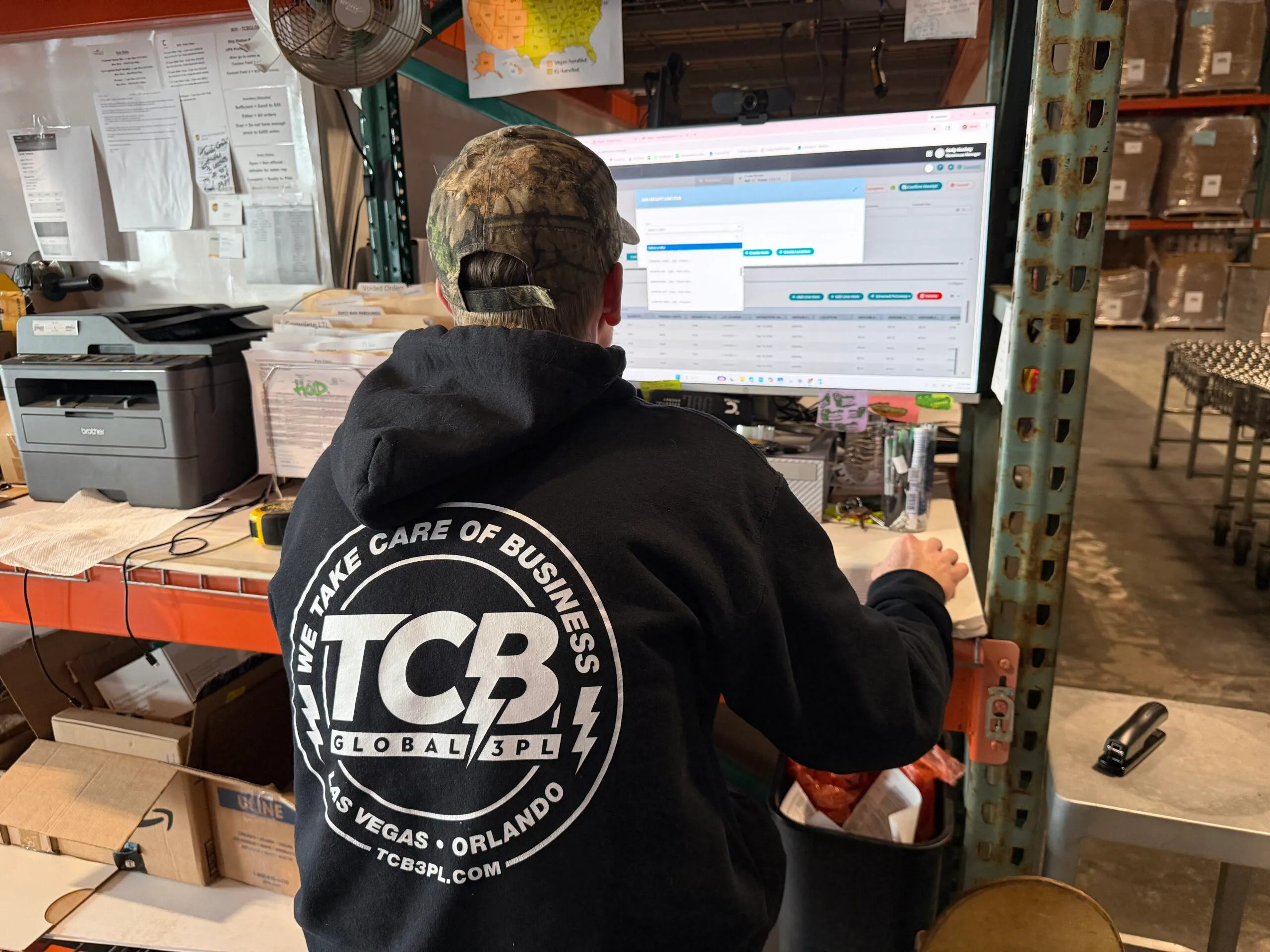
What's in place: TCB Global manages inventory and order visibility through Extensiv, its warehouse management system, across both its Orlando and Las Vegas facilities. That system provides real-time inventory tracking and order status. It's a specific, named, verifiable piece of infrastructure, not a vague reference to "AI-powered systems."
What TCB Global doesn't claim: TCB Global doesn't run a named AI demand-forecasting engine, predictive-slotting algorithm, or machine-learning routing system, and doesn't imply otherwise. Plenty of 3PL marketing in this space implies exactly that kind of tooling in general terms without naming anything specific, which is a pattern worth being skeptical of as a buyer. At TCB Global, data-driven decision-making happens through process and analysis on top of the WMS, not through a branded AI product.
What AI Improves When Layered Onto a Strong Foundation
When the underlying process discipline is already in place, data-driven forecasting and analysis tools create real value across several specific areas of fulfillment.
Demand Forecasting
Traditional forecasting typically relies on historical averages, spreadsheets, and judgment calls. That's workable when demand is stable, but scaling brands rarely stay stable for long, dealing with product launches, marketing spikes, influencer campaigns, and multi-channel complexity all at once. Data-driven forecasting analyzes a broader set of variables (regional demand patterns, seasonality, channel-specific trends) to produce a more current picture than a simple historical average would, which helps reduce both stockouts and excess inventory sitting unsold.
Inventory Placement Across Locations
For a brand operating across more than one fulfillment location, data-driven analysis can help inform where inventory should sit and how much should be allocated to each region based on actual demand patterns, rather than an even default split. This is particularly relevant for a multi-location operation like one spanning Orlando and Las Vegas, where regional demand can shift meaningfully over time.
Order Routing and Shipping Decisions
Determining which warehouse should fulfill a given order, and which carrier and service level best fits that specific shipment, is a decision that benefits from systematic, data-informed logic rather than a single default rule applied to every order. This becomes more valuable specifically for a 3PL operating multiple locations, since there's an actual choice to optimize between.
Pattern Recognition for Error Reduction
Analyzing patterns in mis-picks, returns, and inventory discrepancies can surface a recurring root cause that would otherwise stay hidden in a pile of individually unremarkable incidents, giving a fulfillment operation something concrete to fix rather than treating each error as an isolated event.
What Data-Driven Tools Cannot Fix
Broken warehouse processes: if picking, packing, and inventory workflows are inconsistent, better analytics will surface the problem faster, not solve it.
Poor data quality: forecasting and routing tools are only as good as the underlying inventory data. Inaccurate inventory produces inaccurate forecasts regardless of how sophisticated the analysis is.
Lack of operational discipline: software doesn't replace standardized workflows. Without them, there's nothing reliable for the analysis to actually optimize.
The wrong fulfillment partner: a reactive, disorganized 3PL isn't fixed by adding technology on top. The operational foundation has to be solid first.
Questions to Ask a 3PL About How It Actually Uses Data and Technology
- What specific decisions (forecasting, routing, slotting) are actually informed by data analysis, versus described in general marketing terms?
- How is inventory accuracy maintained, since forecasting and routing tools are only as reliable as the underlying data feeding them?
- Can the provider show a concrete example of how this has changed a real operational decision, rather than a general assurance that they "use AI"?
- Is technology layered on top of standardized, consistent processes, or is it being used to paper over an inconsistent underlying operation?
How TCB Global Approaches This: Process First, Then Technology
TCB Global's approach doesn't lead with AI as the headline. It leads with the operational foundation, since the best technology in the world doesn't fix a weak one. That foundation includes process consistency across its Orlando, Florida and Las Vegas/Henderson, Nevada facilities, inventory accuracy managed through Extensiv, strategic multi-location placement, and real-time visibility into inventory and order status.
Demand forecasting, inventory allocation across the two locations, and order routing are informed by structured, data-driven analysis built on top of that foundation. That's an approach and a discipline, not a named AI product.
What This Means for Beverage and Multi-Channel Brands Specifically
For brands managing inventory across DTC, Amazon, retail, and wholesale simultaneously (a common pattern for beverage brands specifically), data-driven forecasting helps keep inventory allocation aligned across channels that would otherwise compete for the same physical stock. This matters most where channel behavior differs meaningfully: DTC demand is often driven by different triggers (marketing, subscriptions) than retail replenishment cycles, and treating them as the same forecasting problem tends to produce worse results than analyzing them with their actual differences accounted for.
What Changes as a Fulfillment Operation Scales
The value of data-driven forecasting and routing tends to increase with scale. A brand managing a handful of SKUs through one channel has less to gain from sophisticated demand analysis than one managing hundreds of SKUs across multiple channels and locations, where manual judgment alone becomes harder to trust. This is worth revisiting periodically: a brand that didn't need this level of analytical support at an earlier, smaller stage may benefit from it substantially once channel and SKU complexity increase.
FAQs
Does TCB Global use a specific named AI forecasting or slotting tool?
No. TCB Global's technology infrastructure is Extensiv, its warehouse management system. Demand forecasting and inventory allocation are handled through structured, data-driven analysis rather than a named AI product.
Can data-driven forecasting fix a fulfillment operation that's already struggling?
No. It requires clean data and consistent underlying processes to be effective. Layering analytics on top of a broken operation tends to expose the problems faster rather than solve them.
Does using data-driven tools replace warehouse staff?
No. These tools are meant to enhance human decision-making and operational efficiency, not replace the people executing the work.
What should a brand expect from a modern 3PL regarding technology?
Real-time inventory visibility, consistent process discipline across locations, and data-informed decision-making, not just a general claim of being "AI-powered."
How does multi-location fulfillment benefit from data-driven forecasting?
It helps determine how inventory should be allocated between locations based on actual regional demand, rather than an even default split that doesn't reflect where customers actually are.
How does TCB Global approach technology in its fulfillment operations?
By building the operational foundation first (process consistency, inventory accuracy through Extensiv, and real-time visibility across Orlando and Las Vegas), then layering data-driven decision-making on top of that foundation.
If you're evaluating whether your current 3PL's technology claims translate into real operational results, contact TCB Global to talk through what's actually driving your forecasting and fulfillment decisions today.
Want to learn more?
Read more about how TCB can help your fulfillment operations suceed! (click here)
Heading 1
Heading 2
Heading 3
Heading 4
Heading 5
Heading 6
Lorem ipsum dolor sit amet, consectetur adipiscing elit, sed do eiusmod tempor incididunt ut labore et dolore magna aliqua. Ut enim ad minim veniam, quis nostrud exercitation ullamco laboris nisi ut aliquip ex ea commodo consequat. Duis aute irure dolor in reprehenderit in voluptate velit esse cillum dolore eu fugiat nulla pariatur.
Block quote
Ordered list
- Item 1
- Item 2
- Item 3
Unordered list
- Item A
- Item B
- Item C
Bold text
Emphasis
Superscript
Subscript
New Post:
Case Study

How F*ck Cancer Runs a Seven-Festival Tour Without a Logistics Team
F*ck Cancer brings cancer awareness to major music festivals through an activation tent. Their team sets it up and tears it down. Since 2024 we've handled everything behind that: routing, freight, delivery, pickup and storage between shows across seven festivals.
Read More